

Free Tool Library
These tools are free to read, download, and use as working references. Some are designed for herbal practice, some for formulation and documentation, and others simply help organize the decisions that happen between an idea and the finished work.
No account required. No paywall. Take what is useful and put it to work.
A note before you begin
Formulation and maker resources are educational tools and do not constitute legal advice, regulatory certification, or a substitute for determining the requirements that apply to your products or business.

HOW TO USE THIS LIBRARY
Start with the problem in front of you.
You do not need to work through these resources in order. Choose the tool that answers the question you are dealing with now, use it alongside the deeper material in the Apothecary Library or Maker’s Bench, and come back when the next question appears.
Use the guides to learn the framework.
Use the charts and records at the bench.
Use the monographs when you need deeper context.
Together, they are meant to make the work clearer, not more complicated.
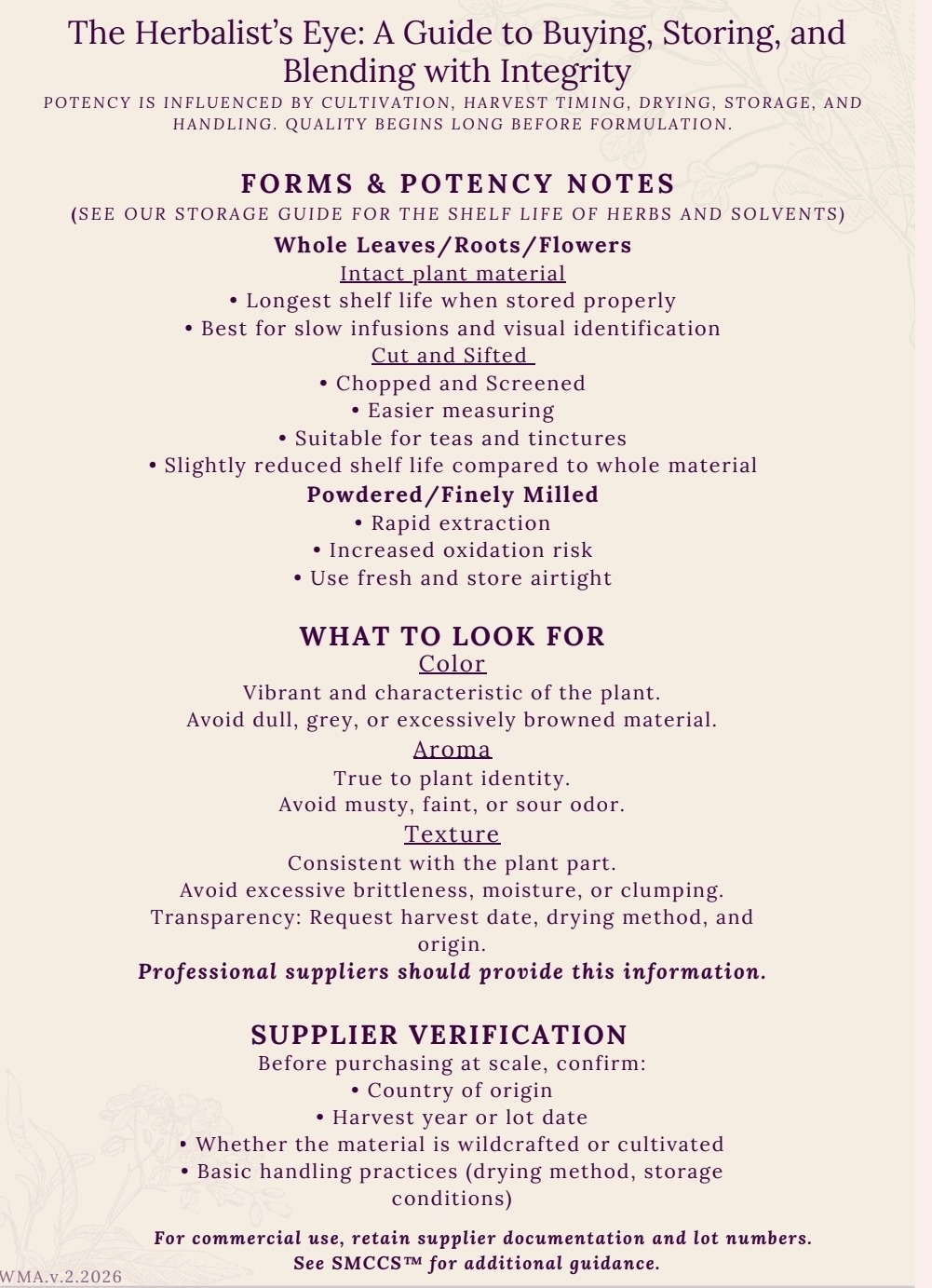
The Buyer's Guide
Buying, Storing, and Blending with Integrity
A practical guide to evaluating herbs beyond the product listing.
Learn how to look at form, color, scent, texture, freshness, sourcing, storage, and the other details that help you make better purchasing decisions.
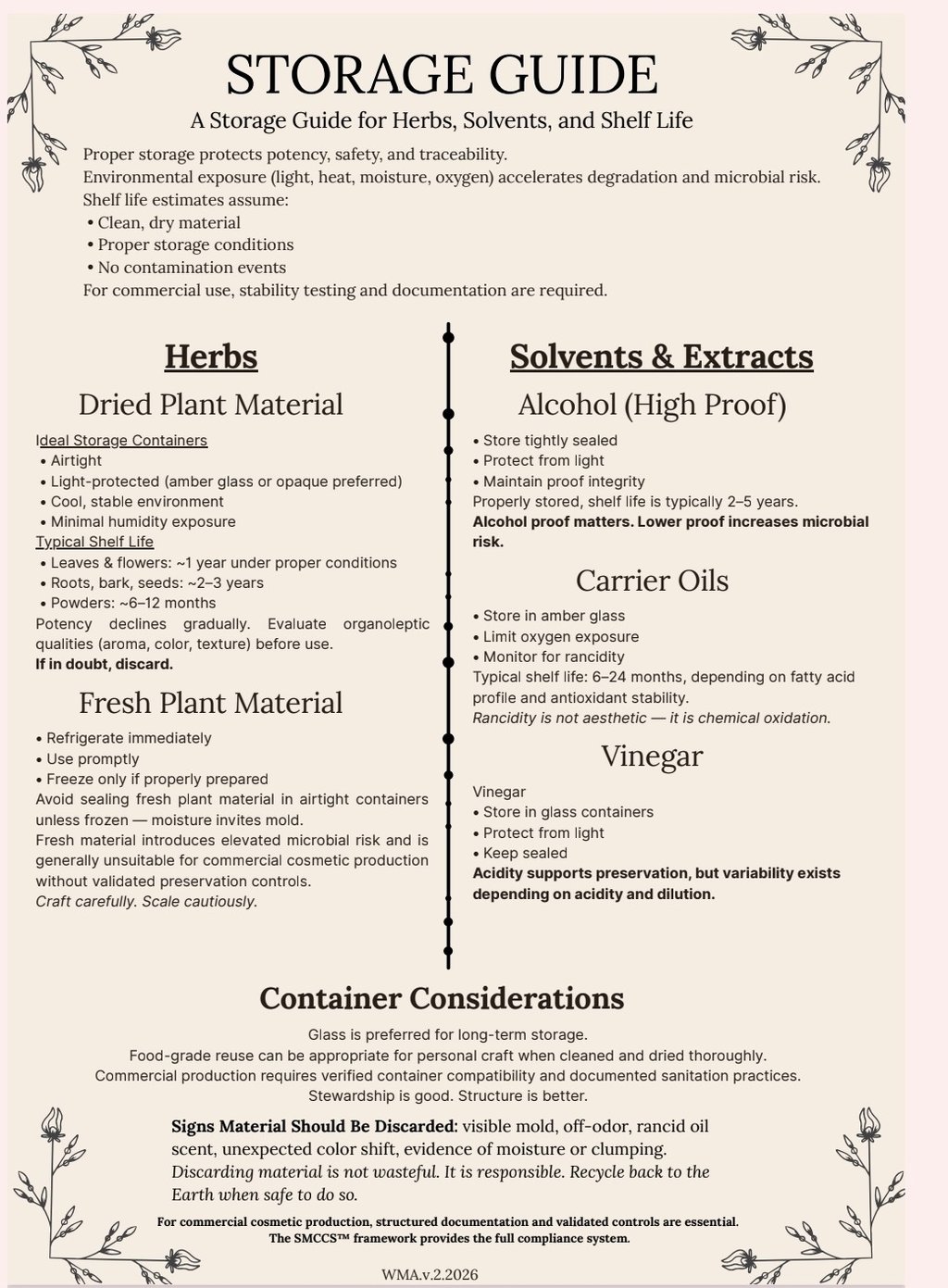
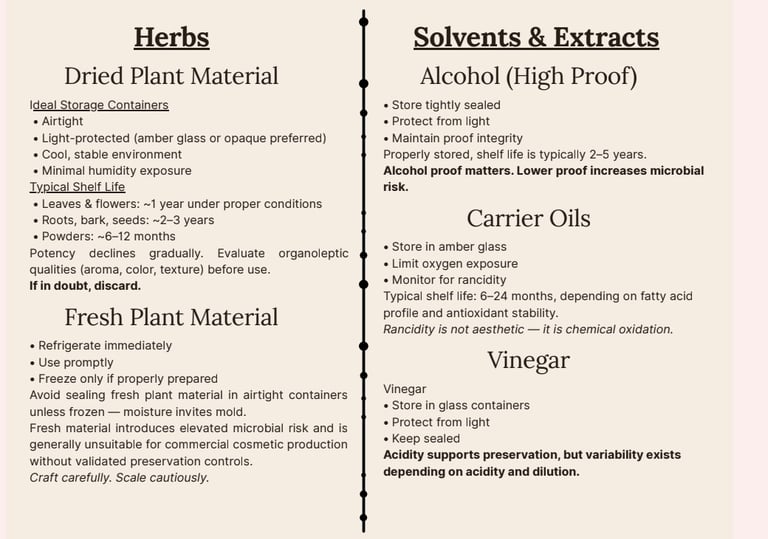
The Storage Guide
Herbs, Solvents, & Shelf-Life Basics
A quick-reference guide for storing plant materials and common preparation ingredients with more intention.
Use it to review storage conditions, plant-part considerations, common solvents and carriers, and the signs that tell you when something no longer belongs on the shelf.
*Stewardship notes (What's that hummus tub doing here?)
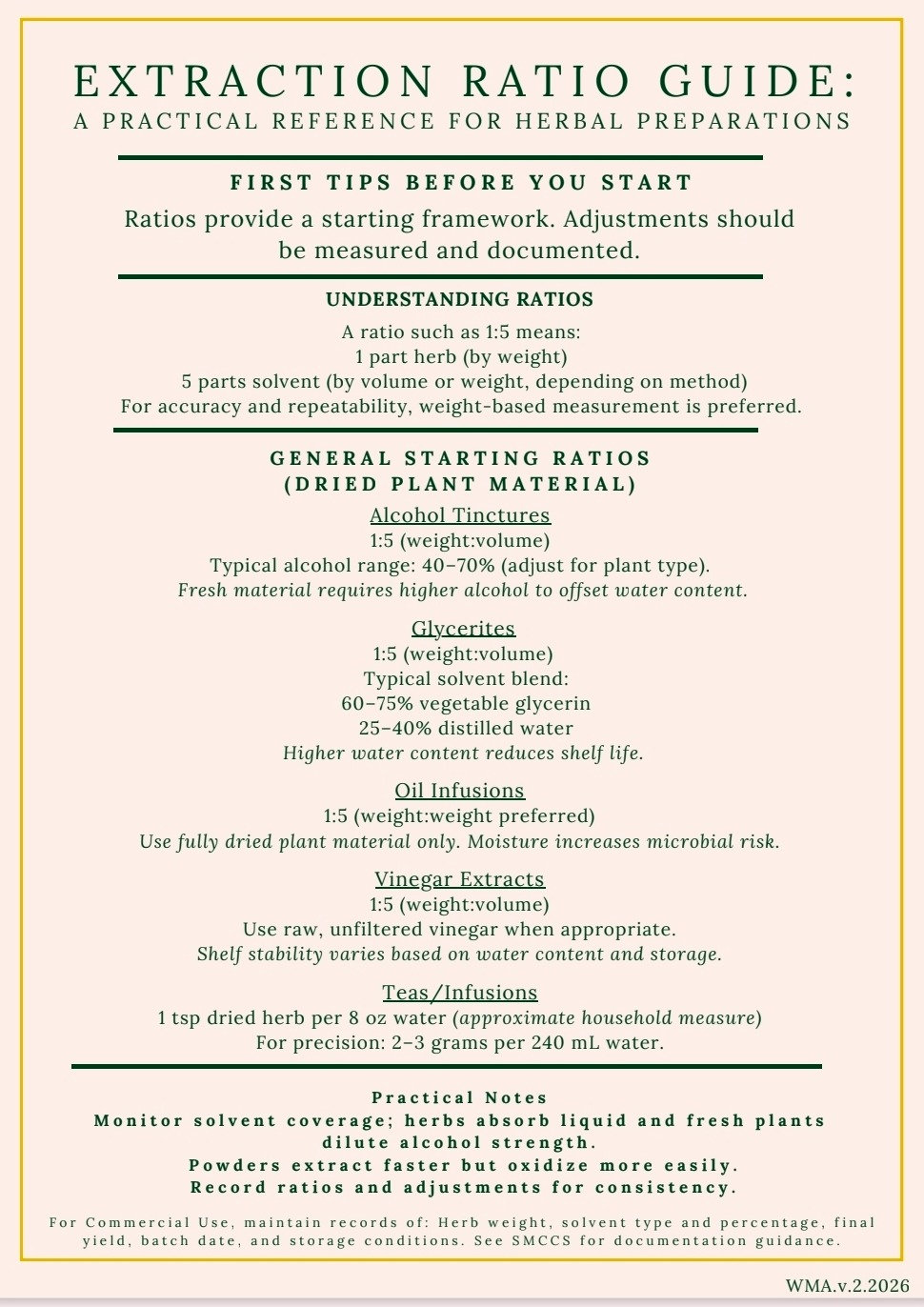
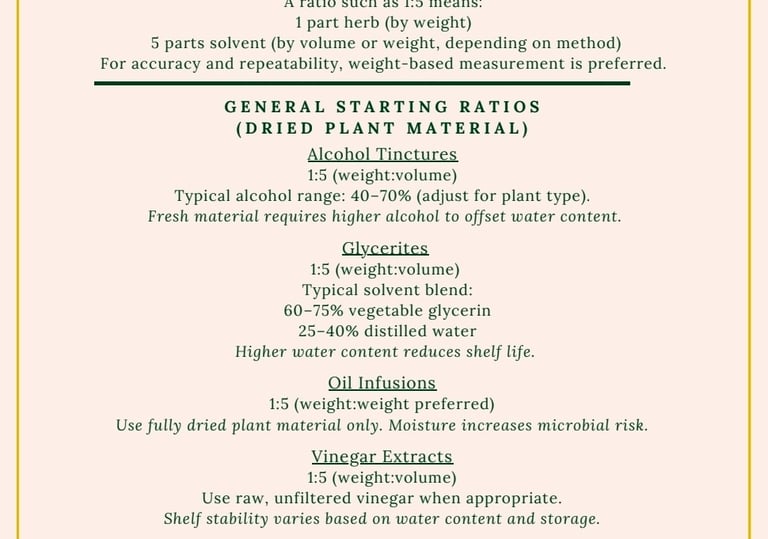
The Ratio Guide
Guide to Practical Ratios and Proportions
A straightforward reference for understanding common herbal preparation ratios without turning the math into a personality test.
Includes examples for infusions, oils, glycerites, teas, and other traditional preparations, along with practical notes for plant materials that swell, sink, clump, or otherwise refuse to cooperate.

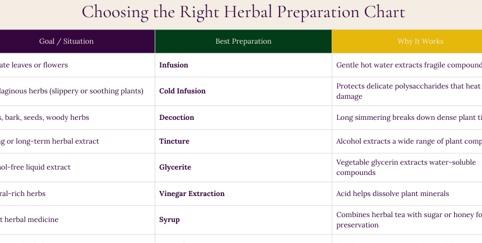
Choosing the Right Herbal Preparation
Not every plant or purpose calls for the same preparation.
This decision guide compares common methods such as infusions, decoctions, glycerites, oils, and other traditional preparations so you can better understand what each method is designed to do and when it may make sense to use it.
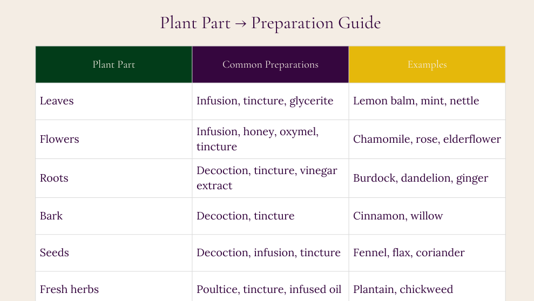
Plant Part → Preparation Guide
Leaves, flowers, roots, bark, seeds, and other plant materials do not behave the same way.
This quick-reference chart helps connect plant structure with commonly used preparation methods, with examples that make the underlying logic easier to apply at the bench.
A Sunday note from Wild Medicine Apothecary with the week’s recap, deeper plant and formulation notes, behind-the-scenes context, and a peek at what’s coming next. No inbox chaos, just one rooted note a week.
Join The Weekly Root-Up


Building products for sale?
Keep Going
Need deeper plant information?
Explore the Apothecary Library for monographs, materials, preparations, history, folklore, and research.
Visit the Maker’s Bench for formulation education, compliance resources, documentation tools, and the structure behind responsible product-making.
Contact
info@wildmedicineguide.com
+1-470-304-8111
© 2026 Wild Medicine Apothecary LLC. All rights reserved.
Kennesaw, GA
Wild Medicine Apothecary LLC provides educational information and professional tools for general informational purposes. Content and resources do not constitute legal advice, medical advice, or regulatory certification.
Herbalism, formulation, folklore, research, and small-batch apothecary work under one roof.
From plant monographs and seasonal features to cosmetic formulation, maker education, and practical documentation systems.
Wild Medicine Apothecary


Check out my other rantings at Brainz Magazine
Root around on our socials here