
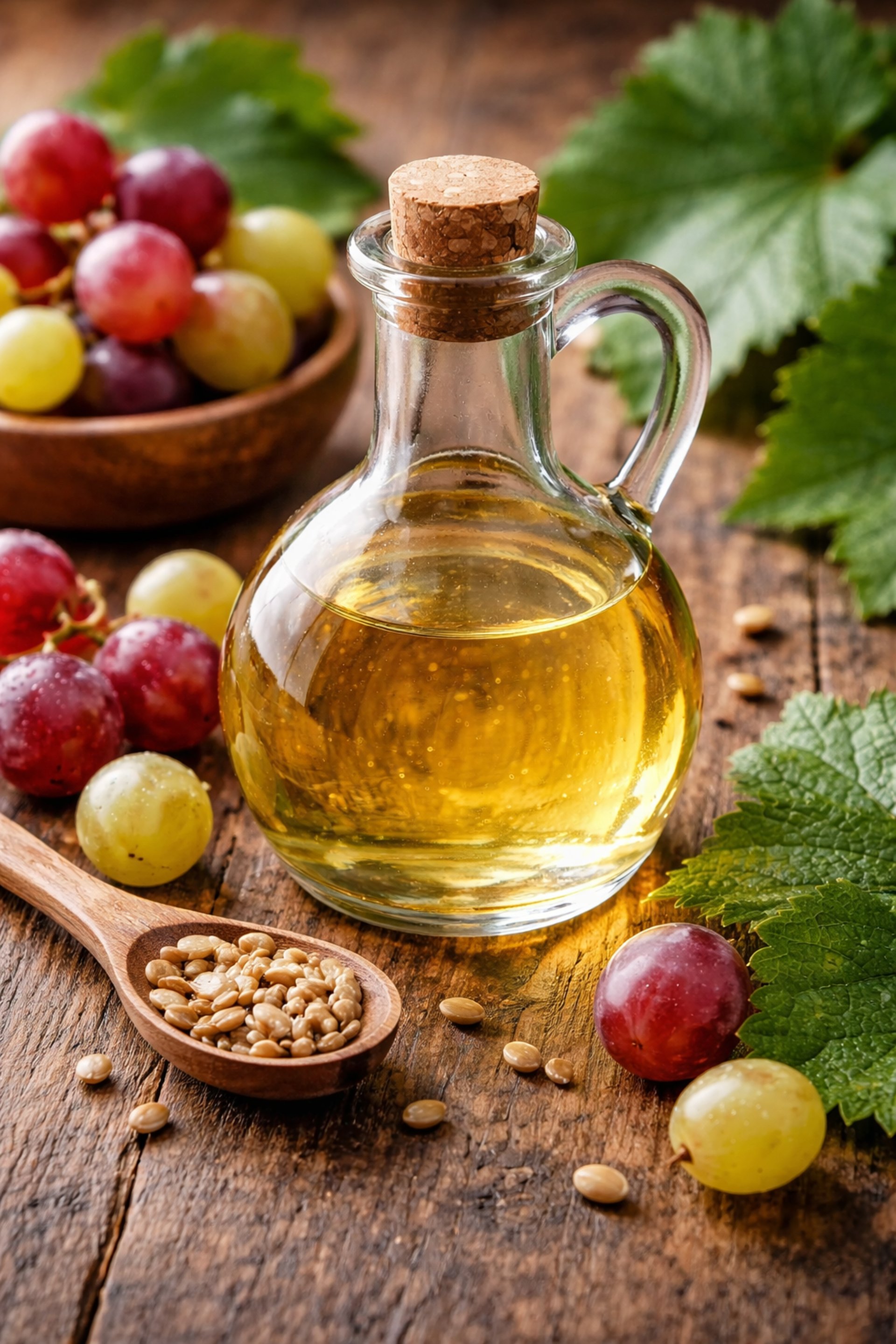
Grapeseed Oil
Vitis vinifera
APOTHECARY MATERIALS
Grapeseed Oil (Vitis vinifera)
Grapeseed oil is a plant-derived apothecary material used as a lightweight, fast-absorbing carrier oil in topical formulations.
It is commonly used in facial oils, serums, massage blends, and lightweight preparations, where it provides quick absorption, smooth glide, and a non-greasy finish.
Grapeseed oil is valued for its light texture and versatility, making it especially useful in formulations where minimal residue and quick penetration are desired.
What is it
Grapeseed oil is extracted from the seeds of grapes (Vitis vinifera), often as a byproduct of winemaking.
In apothecary practice, it functions as:
• A lightweight carrier oil for herbal infusions
• A base for facial and body oils
• A diluent for essential oils
• A balancing oil in blends
It is commonly used when a formulation requires a lighter alternative to heavier oils.
Appearance & Character
A well-quality grapeseed oil typically shows:
• Pale green to light yellow color
• Thin, fluid consistency
• Mild, slightly nutty or neutral aroma
When applied:
• Spreads easily across the skin
• Absorbs quickly
• Leaves little to no oily residue
Its character is light, clean, and unobtrusive, making it ideal for fast-absorbing formulations.
Skin Feel & Absorption
Grapeseed oil is:
• Lightweight
• Fast-absorbing
• Low in heaviness and residue
It provides:
• A smooth, dry finish
• Minimal occlusion
• Quick penetration into the skin
It is especially useful for formulations where a non-greasy feel is desired.
Best For
Grapeseed oil is most effective for:
• Facial oils and serums
• Lightweight body oils
• Massage blends (when lighter glide is preferred)
• Blending with heavier oils to reduce density
• Daily-use topical formulations
It is particularly useful in formulations that prioritize lightness and quick absorption.
Solubility & Extraction Notes
Grapeseed oil is lipophilic (oil-based).
It is used to:
• Extract fat-soluble plant constituents
• Carry herbal compounds in infused oils
• Blend with other oils, waxes, and butters
It does not extract:
• Water-soluble compounds
• Minerals
• Mucilage
Historical & Cultural Context
Grapeseed oil is a relatively modern addition to apothecary practice, emerging alongside the expansion of wine production and seed oil extraction.
While grapes have been used for centuries in Mediterranean traditions, the oil itself became more widely used with advancements in processing techniques.
Today, grapeseed oil is valued for its lightweight texture and versatility, making it a staple in modern herbal and cosmetic formulations.
In the Archive With…
Often used in formulations that focus on lightweight application, fast absorption, and balanced blending, including:
Carrier Oils
Jojoba Oil
Sweet Almond Oil
Rosehip Oil
Lavender
These materials frequently appear in preparations intended to support facial care, lightweight oils, and quick-absorbing topical formulations.
Shelf Life
Grapeseed oil has a shorter shelf life compared to more stable oils.
Typical range:
• 6–12 months
Store in:
• Airtight containers
• Cool, dark conditions
• Refrigeration recommended for extended freshness
Freshness is indicated by a light, neutral aroma; rancidity produces a sharp or sour scent.
Preparation
Grapeseed oil is used as a base ingredient in formulations.
Common uses include:
• Infusing herbs for lightweight oil preparations
• Blending into facial oils and serums
• Combining with essential oils
• Mixing with heavier oils for balance
Best practices include:
• Use for lightweight formulations where quick absorption is desired
• Combine with jojoba oil to improve stability
• Blend with avocado or almond oil for added nourishment
• Pair with rosehip oil in facial preparations
• Use fresh and store properly due to shorter shelf life
Grapeseed oil provides a light, adaptable base that enhances the feel and usability of many formulations.
Safety Notes
Grapeseed oil is generally safe and well tolerated.
Important considerations include:
• Use fresh oil to avoid rancidity
• Store properly to maintain quality
• Monitor for individual sensitivities

Contact
info@wildmedicineguide.com
+1-470-304-8111
© 2026 Wild Medicine Apothecary LLC. All rights reserved.
Kennesaw, GA
Wild Medicine Apothecary LLC provides educational information and professional tools for general informational purposes. Content and resources do not constitute legal advice, medical advice, or regulatory certification.
Herbalism, formulation, folklore, research, and small-batch apothecary work under one roof.
From plant monographs and seasonal features to cosmetic formulation, maker education, and practical documentation systems.
Wild Medicine Apothecary


Check out my other rantings at Brainz Magazine
Root around on our socials here