
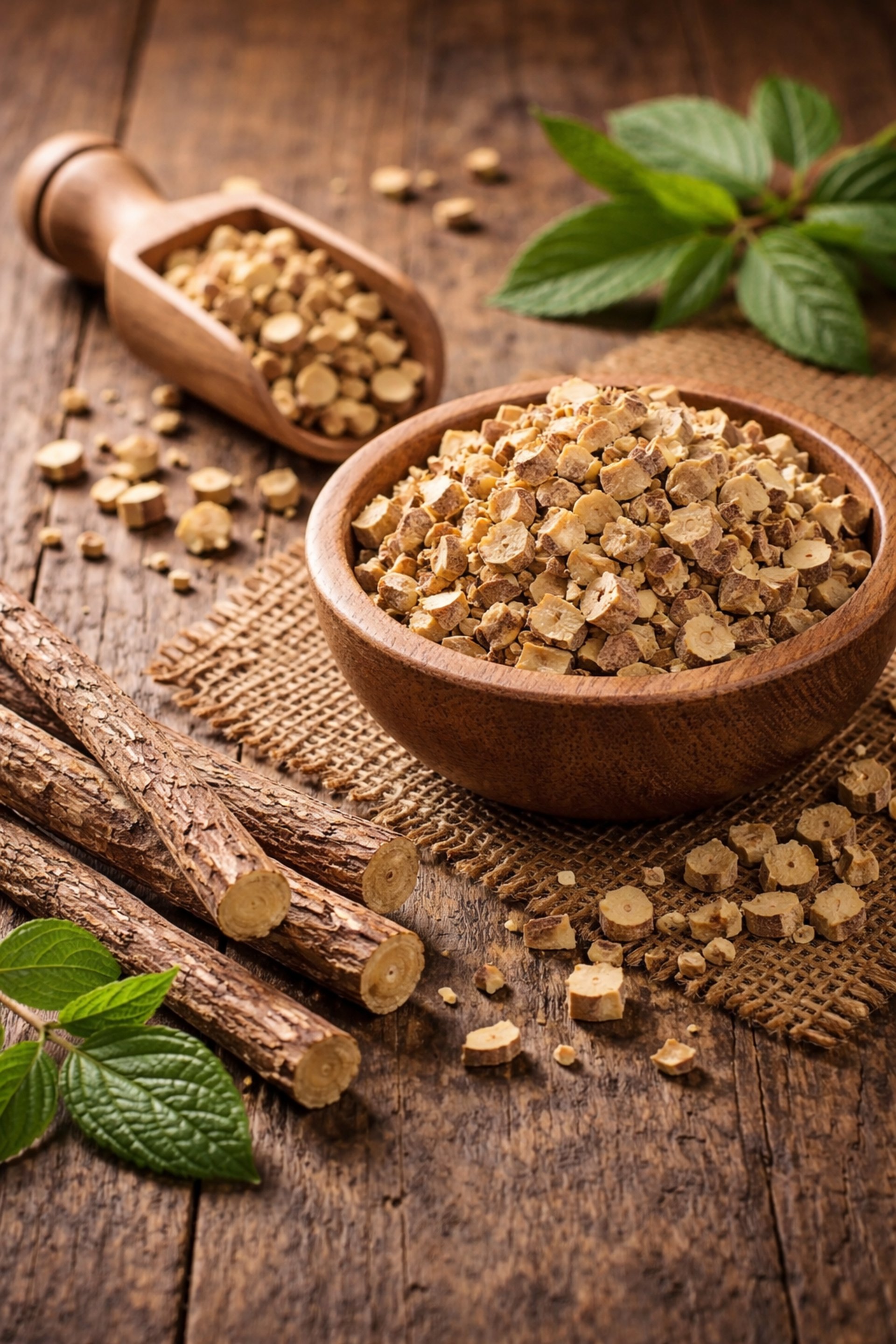
Licorice
Glycyrrhiza glabra / Glycyrrhiza spp.
ROOTS AND BARK
Licorice Root (Glycyrrhiza glabra / Glycyrrhiza spp.)
Preparation & Best Practices
Licorice is commonly prepared in several traditional ways.
Common preparations include:
• Decoctions for root extraction
• Tinctures for concentrated formulas
• Syrups for respiratory blends
• Powdered root in herbal mixtures
• Inclusion in multi-herb formulations
Best practices include:
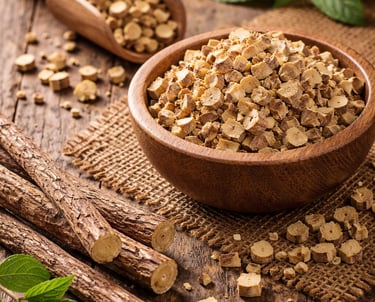
• Slice or break root before decoction
• Use in small to moderate amounts due to potency
• Combine with marshmallow or slippery elm for soothing blends
• Pair with ginger or peppermint for digestive formulas
• Include in formulas to harmonize stronger herbs
Licorice is often used as a supporting herb rather than the primary ingredient.
Best Extraction Practices
Licorice extracts well through both water and alcohol-based preparations.
Recommended methods:
• decoction, tincture, syrup
Water extraction is particularly effective for drawing out its sweet, soothing polysaccharides and saponins.
Shelf Life in Storage
Licorice root should be stored in airtight containers in a cool, dry place away from light and moisture.
Approximate shelf life:
• Dried root: 2–3 years
• Powdered root: 1–2 years
• Tinctures: 3–5 years
Whole root pieces retain quality longer than powders.
Safety Notes
Licorice is a potent and widely used herb, but it should be used with awareness.
Important considerations include:
• Long-term high intake may affect fluid balance and blood pressure
• Use caution in individuals with hypertension
• Deglycyrrhizinated licorice (DGL) is sometimes used when these effects are a concern
• Consult a practitioner when using alongside medications
Moderation and appropriate formulation are key.
Energetic & Ritual Associations
In traditional herbal energetics, licorice is often considered moistening, harmonizing, and gently strengthening.
It is frequently used to balance and integrate formulas, softening extremes and bringing cohesion to herbal combinations.
Symbolically, licorice has been associated with unity, sweetness, and cooperation, reflecting its role in blending and supporting other herbs.
In the Archive With…
Often associated with herbs traditionally used for soothing, digestive, and harmonizing support, including:
Marshmallow
Slippery Elm
Ginger
Peppermint
Mullein
These herbs frequently appear in preparations intended to support tissue soothing, digestive balance, and cohesive herbal formulations.
Appearance & Character
Licorice is a perennial herb with upright stems, pinnate leaves, and clusters of small pale purple to blue flowers, followed by seed pods. While the above-ground plant is modest in appearance, the primary medicinal portion lies beneath the surface.
The root is long, fibrous, and yellow-brown, with a dense yet slightly pliable texture when fresh. When dried, it becomes firm and woody, often cut into sticks or slices.
Licorice root has a distinctly sweet flavor, many times sweeter than sugar, with a mild earthy undertone. The sweetness lingers on the palate and has a naturally soothing, coating quality.
Identity & Origin
Licorice most commonly refers to Glycyrrhiza glabra, though other species such as Glycyrrhiza uralensis are also widely used.
It belongs to the Fabaceae (legume) family and is native to southern Europe, western Asia, and parts of the Middle East, with extensive cultivation across Asia.
Key identifying features include:
• Leaf: pinnate leaves with multiple small leaflets
• Flower: small pale purple to blue blossoms
• Root: long, branching, yellow interior
• Growth habit: spreading perennial with underground runners
Common names include:
• Licorice
• Sweet root
• Gan cao (in Chinese herbal traditions)
Parts traditionally used:
• Root
Key Minerals & Constituents
Licorice root contains a range of compounds contributing to its distinctive properties.
Key constituents include:
• Glycyrrhizin (sweet saponin compound)
• Flavonoids
• Polysaccharides
• Coumarins
• Phytoestrogens
These compounds contribute to licorice’s reputation as a soothing, harmonizing, and adaptogenic herb in many traditional systems.
Historical & Cultural Context
Licorice has been used for thousands of years across Chinese, Ayurvedic, Middle Eastern, and European herbal traditions.
In Traditional Chinese Medicine, licorice (Gan Cao) is one of the most commonly used herbs and is often included in formulas to harmonize and balance other ingredients.
Ancient Egyptian records show licorice being used in beverages and herbal preparations, and it was found in the tomb of King Tutankhamun.
Across traditions, licorice became known as both a medicinal and culinary plant, valued for its sweetness and its ability to soften and unify complex herbal formulas.
Uses in Apothecary Work
In herbal practice, licorice is commonly used to support:
• Digestive soothing
• Respiratory comfort
• Adrenal and stress support
• Herbal formula harmonization
• Gentle demulcent action
Commonly used parts
• Root — decoctions, tinctures, powders, syrups, and blends
Licorice is frequently used in formulas to enhance flavor, improve palatability, and support overall balance.
Contact
info@wildmedicineguide.com
+1-470-304-8111
© 2024. All rights reserved.
Kennesaw, GA
Wild Medicine Guide provides educational resources and professional tools. It does not provide legal advice or regulatory certification.
Wild Medicine Guide is part of the educational work of Wild Medicine Apothecary (WMA).
Wild Medicine Apothecary provides compliance education, documentation systems, and botanical reference materials for independent cosmetic brands.