
Benzoin
Styrax benzoin / Styrax tonkinensis
RESIN
Benzoin (Styrax benzoin/Styrax tonkinesis)
Preparation & Best Practices
Benzoin is commonly prepared in several ways.
Common preparations include:
• Tinctures (often called benzoin tincture)
• Resin powders
• Incense blends
• Infused oils
Best practices include:
• Use alcohol for tincture extraction (preferred)
• Gently warm for oil infusion
• Combine with frankincense and myrrh for resin blends
• Pair with lavender or rose for aromatic balance
• Use in small amounts due to strong scent
Benzoin is often used as a fixative and aromatic anchor in formulations.
Best Extraction Practices
Benzoin extracts best through:
• Resin — alcohol (tincture, preferred)
• Resin — oil infusion (gentle heat)
• Resin — aromatic use (burning)
Alcohol is especially effective for extracting its aromatic and preservative compounds.
Shelf Life in Storage
Benzoin resin is highly stable.
Typical range:
• Raw resin: many years when stored properly
• Tincture: 5+ years
• Infused oil: 6–12 months
Store in:
• Airtight containers
• Cool, dry conditions
Safety Notes
Benzoin is generally considered safe when used appropriately.
Important considerations include:
• Use moderate amounts
• Ensure proper dilution for topical use
• Be mindful of sensitivities
Energetic & Ritual Associations
Benzoin is considered warming, comforting, and stabilizing.
It is often used when there is a need for soft grounding, emotional warmth, or gentle support, helping to create a sense of ease and cohesion.
Symbolically, benzoin has been associated with comfort, sweetness, and restoration, often used to soften harsher blends and bring harmony.
In the Archive With…
Often associated with materials traditionally used for aromatic, grounding, and resin-based preparations, including:
Frankincense
Myrrh
Lavender
Rose
Beeswax
These materials frequently appear in preparations intended to support aromatic balance, topical formulations, and grounding practices.
Appearance & Character
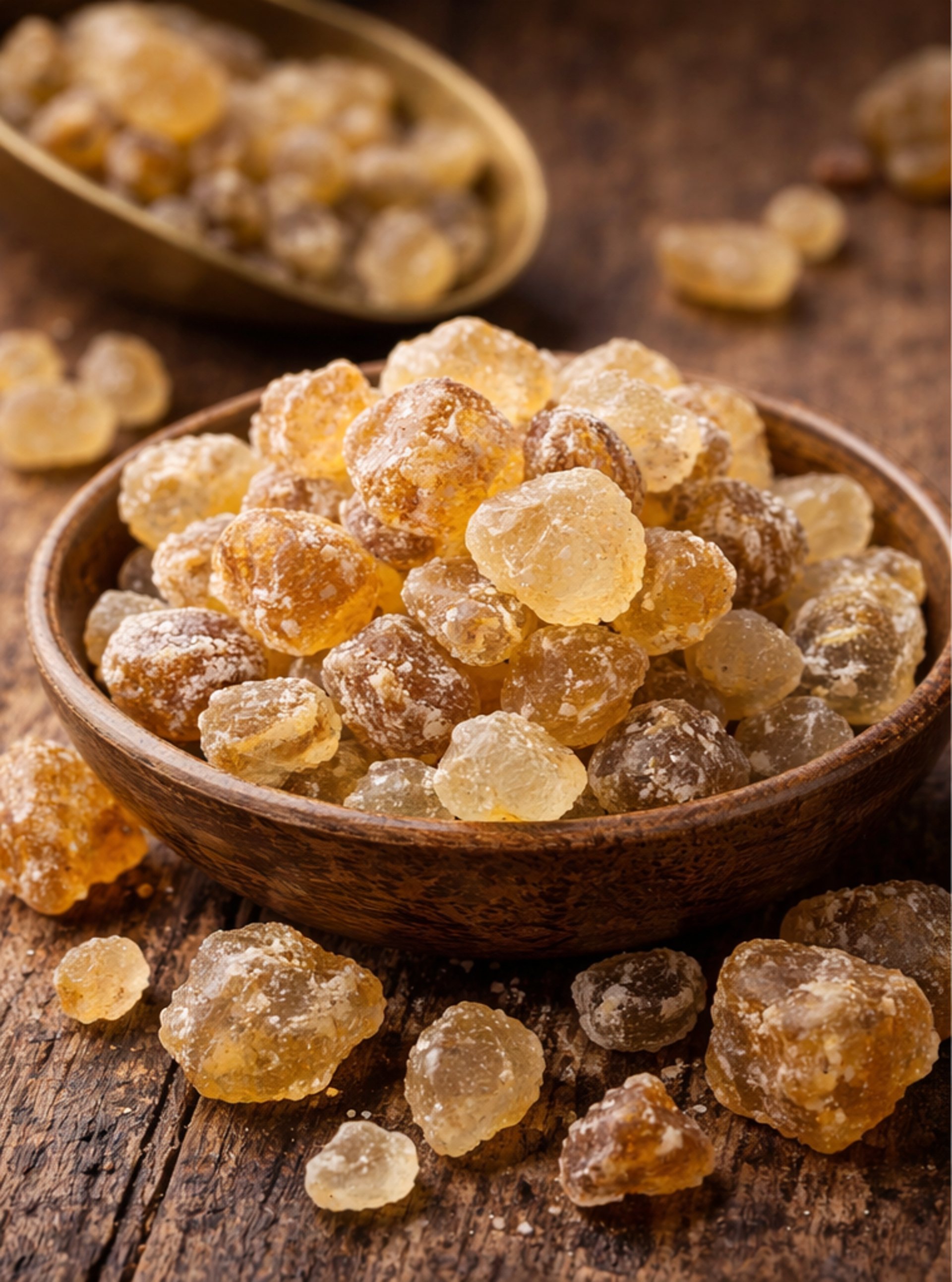
Benzoin is a resin that forms as irregular, hardened chunks or tears, typically appearing amber to reddish-brown, often with lighter streaks or milky inclusions.
The resin is firm but slightly pliable, especially when warmed, and may feel somewhat sticky to the touch.
It has a rich, warm, sweet aroma, often described as vanilla-like, balsamic, and slightly spicy, with a comforting and enveloping scent.
Its character is soft, resinous, and deeply aromatic, offering both grounding and gentle uplifting qualities.
Identity & Origin
Benzoin is derived from trees in the Styrax genus, belonging to the Styracaceae family.
It is native to Southeast Asia, particularly regions of Indonesia, Thailand, and surrounding areas.
Key identifying features include:
• Resin: amber to reddish-brown chunks
• Texture: firm, slightly sticky when warmed
• Aroma: sweet, balsamic, vanilla-like
• Source: tree resin tapped from bark
Common names include:
• Benzoin
• Gum benzoin
Parts traditionally used:
• Resin (primary)
Key Minerals & Constituents
Benzoin contains a range of aromatic compounds.
Key constituents include:
• Benzoic acid
• Vanillin
• Resins
• Volatile oils
These contribute to its role as an aromatic, preservative, and skin-supportive resin.
Historical & Cultural Context
Benzoin has been used for centuries in Asian, Middle Eastern, and European traditions, particularly in incense, perfumery, and medicinal preparations.
It has historically been valued for its warming, comforting scent, as well as its use in preserving and stabilizing preparations.
Benzoin has often been associated with comfort, warmth, and emotional grounding, used in both ritual and daily applications.
Uses in Apothecary Work
In apothecary practice, benzoin is commonly used to support:
• Aromatic and grounding preparations
• Skin-supportive formulations
• Incense and ritual blends
• Preservation and stabilization of preparations
• Gentle respiratory support (aromatic)
Commonly used forms
• Resin — tinctures, incense, infused oils
Benzoin is especially well known for its role in aromatic and skin preparations, where its sweet scent and protective qualities are valued.

Contact
info@wildmedicineguide.com
+1-470-304-8111
© 2026 Wild Medicine Apothecary LLC. All rights reserved.
Kennesaw, GA
Wild Medicine Apothecary LLC provides educational information and professional tools for general informational purposes. Content and resources do not constitute legal advice, medical advice, or regulatory certification.
Herbalism, formulation, folklore, research, and small-batch apothecary work under one roof.
From plant monographs and seasonal features to cosmetic formulation, maker education, and practical documentation systems.
Wild Medicine Apothecary


Check out my other rantings at Brainz Magazine
Root around on our socials here