
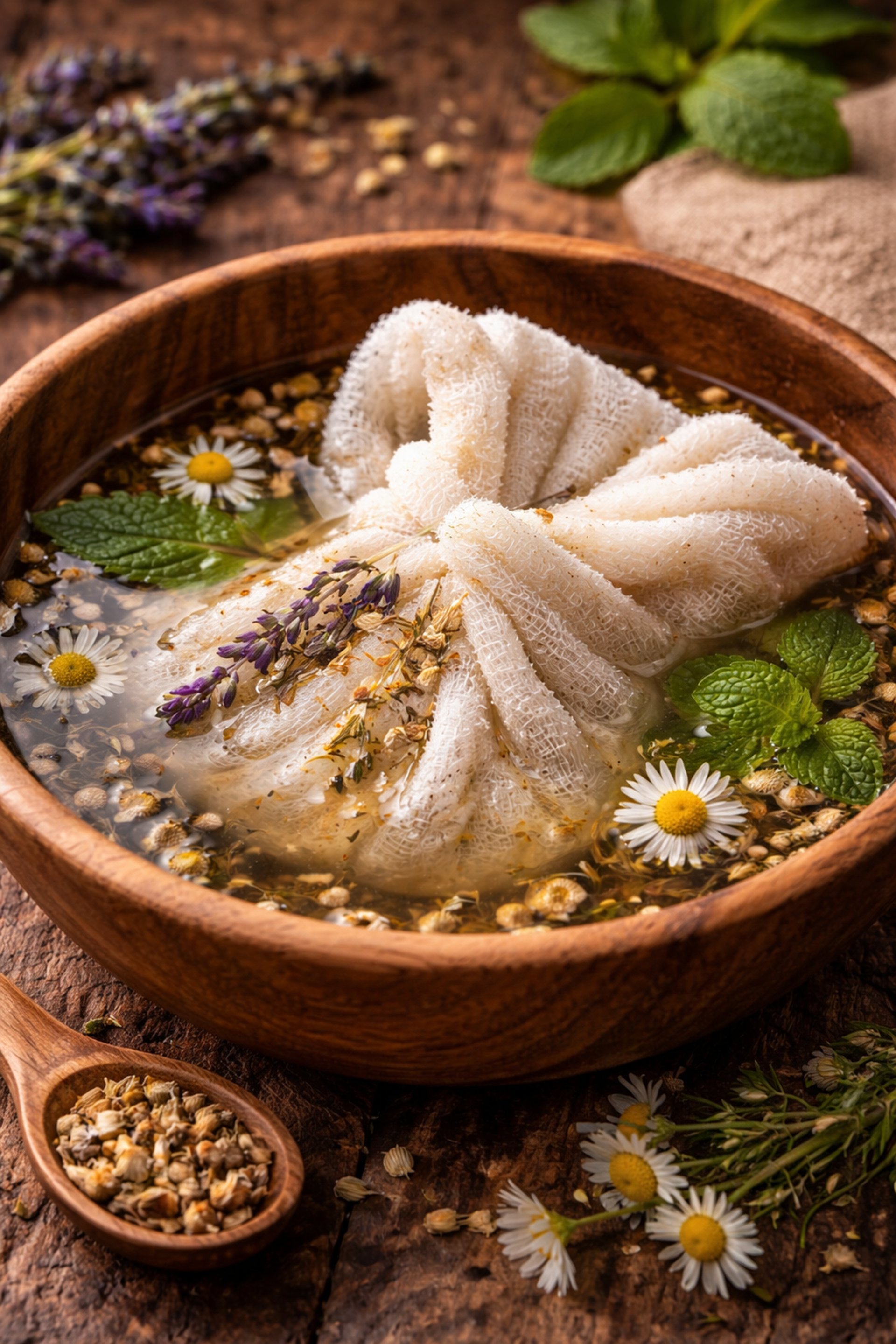
Compress / Fomentation
Localized Water-Based Application
PREPARATION METHODS
Compress / Fomentation (localized water-based application)
A compress, also known as a fomentation, is a preparation method in which a cloth soaked in an herbal infusion or decoction is applied directly to a specific area of the body.
This method allows for sustained, localized contact, combining the effects of moisture, warmth (or coolness), and herbal constituents.
Compresses are valued for their ability to provide focused, repeated application, making them more targeted than washes but less dense than poultices.
What It Is
A compress is prepared by:
• Making an herbal infusion or decoction
• Soaking a clean cloth in the liquid
• Applying the cloth to the body
It may be used as:
• Warm application (fomentation)
• Cool application (compress)
The cloth is:
• Held in place
• Reapplied as needed
• Used over a period of time
Compresses function as a controlled delivery method, allowing herbs to remain in contact with a specific area.
Appearance & Character
Compresses involve:
• A liquid herbal preparation
• A saturated cloth or fabric
• Direct contact with the skin
Their character is:
• Moist
• Sustained
• Localized
They provide more contact time and intensity than a rinse, without the density of a poultice.
Best For
Compresses are especially useful for:
• Targeted external applications
• Localized areas of the body
• Situations where repeated or sustained contact is beneficial
• Bridging between light washes and heavier poultices
They are ideal when a specific area requires focused attention.
Solubility & Extraction Notes
Compresses rely on water-based extraction methods.
Key approaches include:
• Infusion — for leaves and flowers
• Decoction — for roots, bark, and denser materials
Important considerations include:
• Water extracts minerals, tannins, mucilage, and water-soluble compounds
• The cloth acts as a delivery medium, holding the preparation against the skin
• Warmth can increase penetration and effect
• Preparations should be freshly made and properly strained
Historical & Cultural Context
Compresses and fomentations have been used across many traditional systems as a simple and effective method for localized herbal application.
They have historically been used in:
Household herbal care
Traditional medicine systems
Daily and ritual practices
The use of warmth, moisture, and plant preparations together has long been recognized as a way to enhance contact and deepen application.
Compresses remain a widely used method due to their accessibility, adaptability, and effectiveness.
Shelf Life
Compress preparations are not shelf-stable.
Typical guidance:
• Use immediately after preparation
• Discard unused liquid after 24 hours
Cloths should be:
• Clean before use
• Washed thoroughly after use
Preparation
Compresses are simple but require intentional preparation.
Common steps include:
• Prepare an infusion or decoction
• Allow to cool slightly (or maintain warmth as needed)
• Soak a clean cloth in the liquid
• Wring out excess liquid
• Apply to the desired area
Best practices include:
• Re-soak and reapply as needed to maintain temperature and moisture
• Use warm preparations for deeper, sustained contact (fomentation)
• Use cool preparations for refreshing or calming applications
• Combine herbs like chamomile, calendula, or plantain for gentle support
• Use clean, natural fabrics (cotton, linen)
Compresses are most effective when applied consistently over a period of time, rather than as a single application.
Safety Notes
Important considerations include:
• Ensure temperature is comfortable and not excessive
• Use clean cloths and preparation tools
• Avoid applying to compromised or highly sensitive skin without care
• Monitor for individual sensitivities

Contact
info@wildmedicineguide.com
+1-470-304-8111
© 2026 Wild Medicine Apothecary LLC. All rights reserved.
Kennesaw, GA
Wild Medicine Apothecary LLC provides educational information and professional tools for general informational purposes. Content and resources do not constitute legal advice, medical advice, or regulatory certification.
Herbalism, formulation, folklore, research, and small-batch apothecary work under one roof.
From plant monographs and seasonal features to cosmetic formulation, maker education, and practical documentation systems.
Wild Medicine Apothecary


Check out my other rantings at Brainz Magazine
Root around on our socials here