
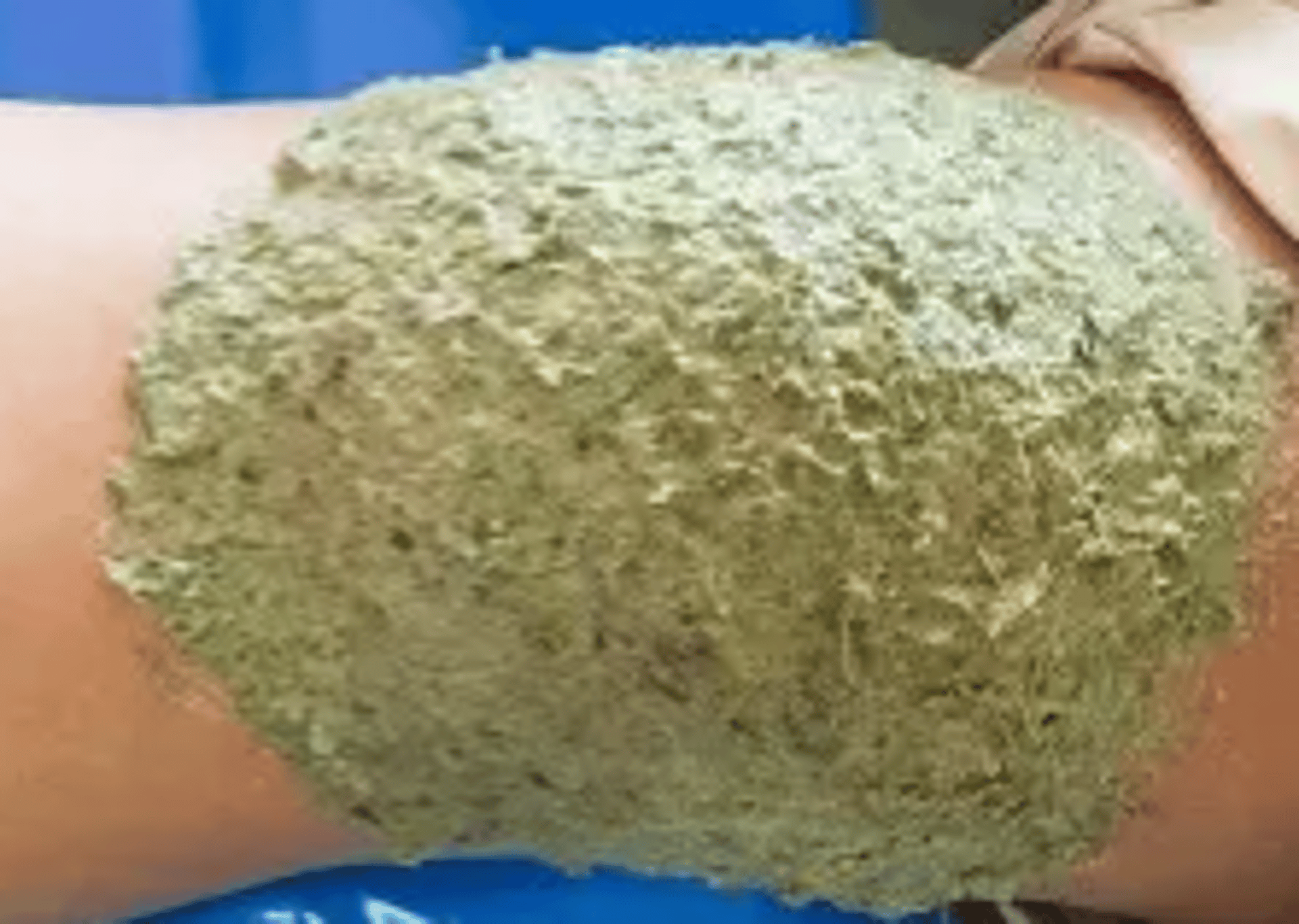
Poultice
cataplasma
PREPARATION METHODS
Best For
Poultices are commonly used for herbs that support:
Minor skin irritation
Bruises or bumps
Insect bites or stings
Superficial wounds
Localized inflammation
They are especially useful when a fresh herb can be applied directly, allowing the plant’s juices and compounds to interact with the skin.
Appearance & Character
A poultice typically appears as:
A moist mass of crushed or softened plant material
A paste-like or leafy mixture placed against the skin
Often wrapped or covered with cloth or gauze
Depending on the herb used, poultices may feel cooling, soothing, moist, or gently warming.
The plant material may be visibly green, fibrous, or pulpy depending on how it is prepared.
Preparation
Poultices can be prepared in several simple ways depending on the herb and situation.
Materials
Fresh or dried herbs
Mortar and pestle, knife, or grinder
Clean cloth or gauze
Warm water if needed
Method
Crush or chop fresh herbs to release their juices.
If using dried herbs, moisten them with warm water to form a paste.
Spread the plant material onto a clean cloth or directly onto the skin.
Place the poultice over the affected area.
Cover with cloth or bandage to hold it in place.
The poultice may be cool, room temperature, or gently warmed depending on the intended use.
Extraction Time
Poultices are typically applied for:
20–60 minutes
In some traditional practices, the poultice may be replaced several times per day as needed.
Fresh plant material is often used immediately after preparation for best effect.
Historical & Cultural Context
Poultices are one of the oldest documented forms of herbal medicine, used in traditional healing systems across the world.
Before modern topical medicines were widely available, herbalists and traditional healers frequently applied fresh crushed plants directly to injuries or skin conditions.
Many Indigenous and folk healing traditions used poultices made from locally available plants as immediate remedies for wounds, bites, and inflammation.
This simple method continues to be valued in modern herbal practice because it allows the fresh plant’s full properties to be applied directly to the body.
In the Archive With…
Often prepared with herbs traditionally used for topical soothing and skin support, including:
Comfrey leaf (coming soon)
These plants have long been valued for their ability to support skin comfort and localized care when applied fresh or moistened.
What It Is
A poultice is a preparation where moistened or crushed plant material is applied directly to the skin, often held in place with cloth or bandaging.
The herbs may be fresh, dried and rehydrated, or lightly warmed to help release their medicinal compounds.
Unlike extracts or teas, a poultice delivers the herb directly to the surface of the body, allowing the plant’s constituents to interact with the skin and underlying tissues.
Poultice (Cataplasma)
A poultice is a traditional herbal preparation in which fresh or softened plant material is applied directly to the skin to support healing and comfort. The herbs are usually crushed, ground, or warmed to release their juices before being placed on the affected area.
Poultices are among the simplest forms of herbal medicine and have been used across cultures for generations to soothe irritated tissues and support the body’s natural healing processes.
Solubility & Extraction Notes
Poultices differ from most herbal preparations because they involve direct contact between plant material and skin, rather than extraction into a solvent.
The preparation may release a mixture of plant constituents including:
Water-soluble compounds
Aromatic compounds
Plant enzymes and juices
Mucilage and polysaccharides
Moisture and warmth help soften the plant tissues, allowing these compounds to become available at the site of application.
Because no filtering occurs, the poultice contains the whole plant material rather than an extract.
Shelf Life
Poultices are fresh preparations and should be used immediately after preparation.
Typical use time:
Single application
Fresh poultices are generally prepared as needed and discarded after use.
Prepared poultice mixtures should not be stored for extended periods because the moist plant material can quickly spoil.
Safety Notes
Poultices should be used with care to protect the skin.
Important considerations include:
Always test a small area of skin first to check for irritation.
Avoid applying poultices to deep wounds or serious infections without guidance.
Ensure herbs are clean and free from contaminants.
Discontinue use if irritation or discomfort develops.
Some plants may be irritating when applied directly to the skin.
Contact
info@wildmedicineguide.com
+1-470-304-8111
© 2024. All rights reserved.
Kennesaw, GA
Wild Medicine Guide provides educational resources and professional tools. It does not provide legal advice or regulatory certification.
Wild Medicine Guide is part of the educational work of Wild Medicine Apothecary (WMA).
Wild Medicine Apothecary provides compliance education, documentation systems, and botanical reference materials for independent cosmetic brands.