
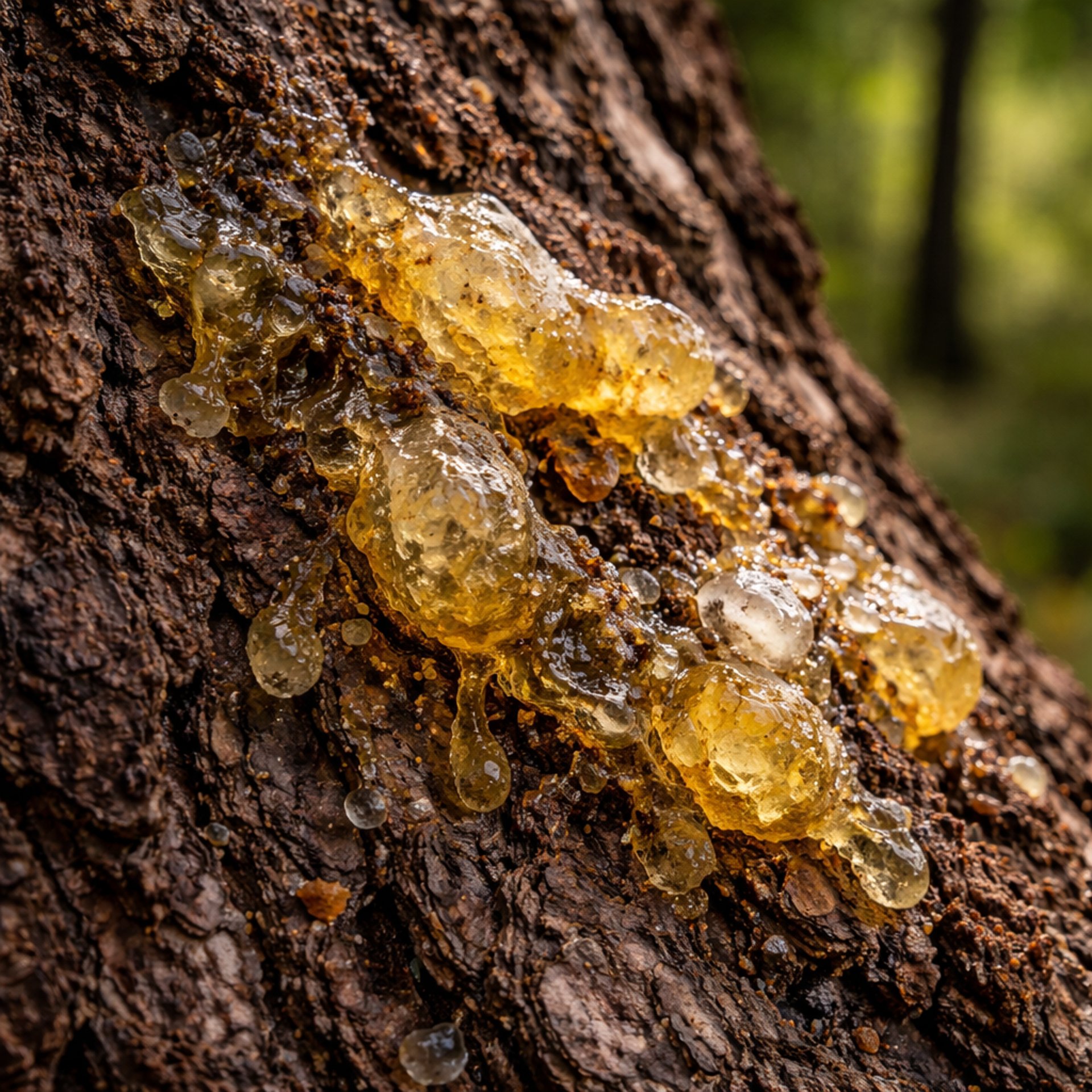
Copal
Protium & Bursera genera
RESIN
Copal (Protium & Bursera genera)
Preparation & Best Practices
Copal is most commonly used in its raw resin form.
Common preparations include:
• Burning as incense
• Resin blends
• Powdered for incense mixtures
• Infused into oils (limited use)
Best practices include:
• Burning on charcoal or appropriate heat source for full aromatic release
• Using in well-ventilated spaces
• Combining with other resins such as frankincense or myrrh for layered blends
• Grinding gently if incorporating into incense mixtures
• Storing in a cool place to prevent softening or sticking
Copal is best used as a sensory and atmospheric enhancer, rather than a primary medicinal ingredient.
Best Extraction Practices
Copal is not typically extracted in water.
It may be:
• Burned directly for aromatic release
• Infused into oil (with gentle heat and patience)
• Powdered for blending
Because of its resinous nature, it responds best to heat and fat-based extraction, rather than water-based methods.
Shelf Life in Storage
Copal should be stored in airtight containers in a cool, dry place away from direct heat.
Approximate shelf life:
• Raw resin — 2–5+ years
• Powdered — ~1–2 years
Resins are generally stable and long-lasting when properly stored.
Safety Notes
Copal is generally considered safe when used appropriately as an aromatic material.
When burned, it should be used in well-ventilated areas. As with all resins, care should be taken when handling heat sources.
Energetic & Ritual Associations
Copal is considered uplifting, clearing, and expansive. It is often used when there is a need to refresh, purify, or shift the energy of a space.
Symbolically, it is associated with connection, offering, and transformation, reflecting its long-standing role in ceremonial practices.
It carries a sense of lightness and elevation, supporting both clarity and openness in the environment and experience.
In the Archive With…
Often associated with aromatic and resin-based materials, including:
Frankincense
Myrrh
Benzoin
Pine Resin
Aromatic Blends
These materials frequently appear in preparations intended to support atmosphere, ritual, and sensory experience, working together to create blends that are both grounding and expansive.
Identity & Origin
Copal refers to a group of aromatic tree resins derived primarily from species within the Protium and Bursera genera. These trees are native to Central and South America, as well as parts of tropical Africa, and have been used for centuries in traditional, ceremonial, and medicinal practices.
The resin is harvested either directly from the tree or collected once it has naturally hardened. Depending on the region and species, copal may vary in color, aroma, and texture, but it is consistently valued for its fragrant, purifying, and preservative qualities.
Copal holds a particularly strong place in Mesoamerican traditions, where it has long been used as a sacred incense and offering.
Appearance & Character
Copal appears as irregular chunks or tears of hardened resin, ranging in color from pale yellow and golden to deeper amber tones. Some varieties are more opaque, while others are semi-translucent with a glossy surface.
When burned or warmed, copal releases a bright, uplifting aroma that is both resinous and slightly citrus-like, often described as lighter and more open than heavier resins like myrrh.
The scent is clean, expansive, and gently sweet, with a soft balsamic depth.
Copal carries a lifting, clearing, and expansive character. It feels lighter than many other resins, bringing a sense of openness and movement rather than heaviness or grounding.
Key Minerals & Constituents
Copal contains a range of aromatic compounds typical of resinous materials.
Key constituents include:
• Terpenes
• Resin acids
• Volatile aromatic compounds
These contribute to its fragrance, preservative qualities, and role in aromatic preparations.
Historical & Cultural Context
Copal has a deep and sacred history, particularly among the Maya and Aztec civilizations, where it was used in ceremonies, offerings, and ritual practices.
It was often burned as incense to:
• Purify spaces
• Carry prayers and intentions
• Honor deities and ancestors
Copal was sometimes referred to as “the food of the gods,” reflecting its importance in spiritual and ceremonial life.
Its use continues today in many traditional and modern practices, maintaining its role as a bridge between the physical and the symbolic.
Uses in Apothecary Work
In herbal and aromatic practice, copal is used to support:
• Space cleansing and purification
• Aromatic and ritual preparations
• Resin-based blends
• Incense and smoke-based applications
• Occasional inclusion in infused oils or balms (less common)
Copal is primarily used as an aromatic and energetic material, rather than a direct internal herb.
It is often included in preparations that focus on environment, atmosphere, and sensory experience, rather than internal formulation.

Contact
info@wildmedicineguide.com
+1-470-304-8111
© 2026 Wild Medicine Apothecary LLC. All rights reserved.
Kennesaw, GA
Wild Medicine Apothecary LLC provides educational information and professional tools for general informational purposes. Content and resources do not constitute legal advice, medical advice, or regulatory certification.
Herbalism, formulation, folklore, research, and small-batch apothecary work under one roof.
From plant monographs and seasonal features to cosmetic formulation, maker education, and practical documentation systems.
Wild Medicine Apothecary


Check out my other rantings at Brainz Magazine
Root around on our socials here