
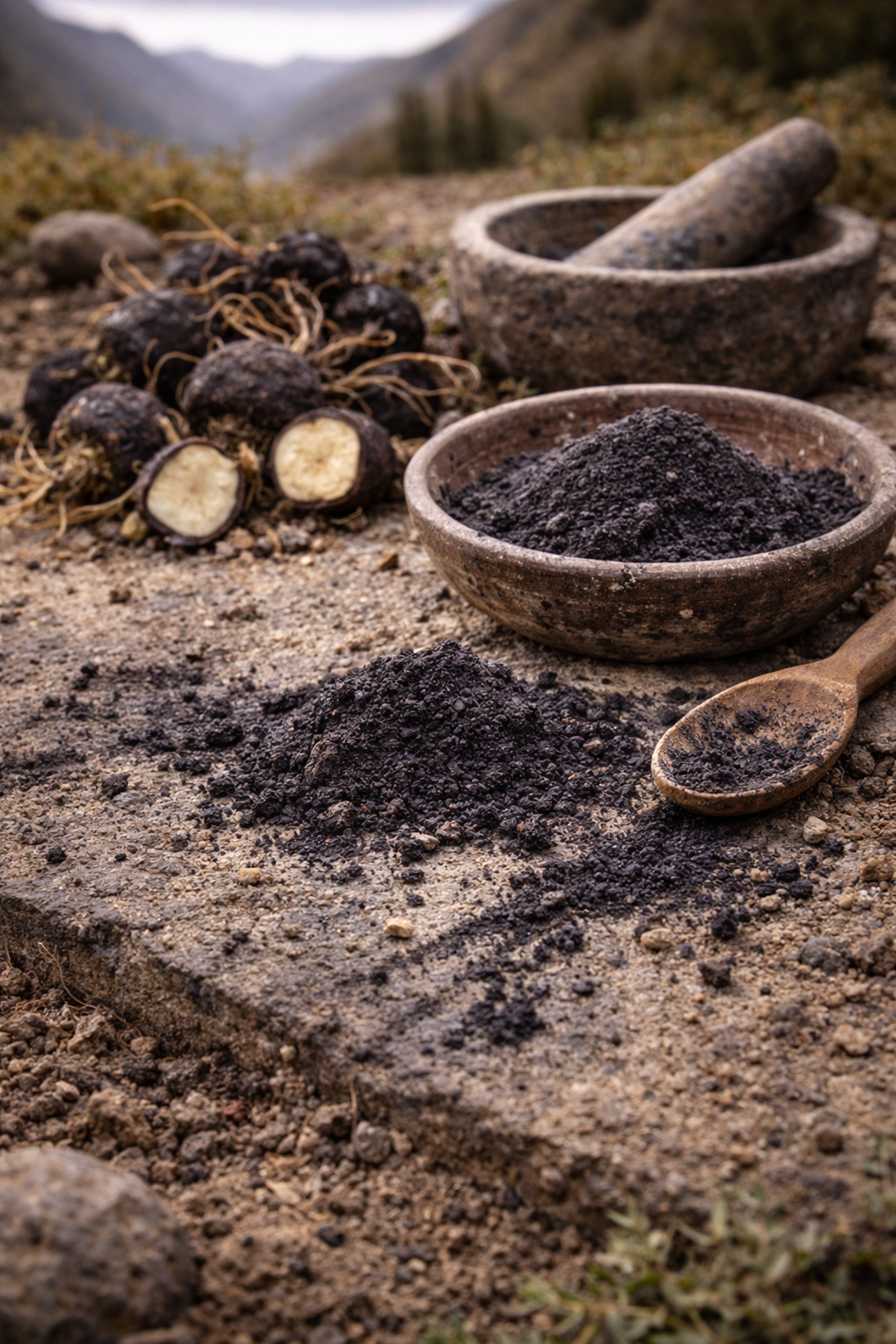
Maca Black
Lepidium meyenii
ROOTS AND BARK
Black Maca (Lepidium meyenii)
Preparation & Best Practices
Black maca is most commonly used in powdered form and can be easily incorporated into daily preparations.
Common preparations include:
• Powders (direct use)
• Blended drinks and tonics
• Electuaries
• Capsules
Best practices include:
• Using earlier in the day due to its activating nature
• Combining with cacao, cinnamon, or ginger for supportive blends
• Pairing with fats or milk-based preparations for balance
• Starting with moderate amounts and adjusting as needed
• Using consistently while monitoring individual response
Black maca is particularly well suited for structured, intentional use, especially when energy and output are desired.
Best Extraction Practices
Black maca is not typically extracted in the traditional sense.
It is most effective when consumed as a whole powdered material, allowing the full spectrum of its compounds to remain intact. Gelatinized forms may be used for improved digestibility if preferred.
Shelf Life in Storage
Black maca powder should be stored in airtight containers in a cool, dry place away from direct light.
Approximate shelf life:
• Powder — 1–2 years
• Blended preparations — varies depending on ingredients
Proper storage helps maintain both potency and flavor.
Safety Notes
Black maca is generally considered safe and well tolerated.
Due to its more activating nature, it is best used with awareness of timing and individual sensitivity. As with all tonic materials, gradual introduction and consistent use are recommended.
Energetic & Ritual Associations
Black maca is considered warming, activating, and outward-moving. It is often used when there is a need for drive, momentum, and sustained energy.
Symbolically, it is associated with action, strength, and forward movement, reflecting its more dynamic and expressive nature.
It carries a sense of momentum and engagement, supporting the transition from rest or buildup into action and output.
In the Archive With…
Often associated with tonic and grounding formulations, including:
Maca Root (Overview)
Yellow Maca
Ashwagandha
Cacao
Honey
These materials frequently appear in preparations intended to support resilience, nourishment, and long-term vitality, working together to create blends that are steady, grounding, and deeply supportive.
Identity & Origin
Black maca is a naturally occurring variety of Lepidium meyenii, cultivated in the high-altitude regions of the Peruvian Andes alongside yellow and red maca.
It is the least common of the three primary varieties and has traditionally been regarded as the most potent or concentrated expression of the plant. Like all maca, it grows in extreme environmental conditions, where intense sun, cold, and mineral-poor soils shape its development.
Harvested, dried, and typically prepared as a powder, black maca forms the most distinct and directional branch of the maca system.
Appearance & Character
Black maca root ranges in color from deep brown to nearly black when dried, producing a darker, richer powder than the other varieties.
Its aroma is more pronounced—earthy, dense, and slightly roasted in character. The flavor follows suit, offering a deeper, more robust profile with less sweetness and more intensity.
Black maca carries a stimulating, outward-moving, and activating character. Where red maca settles and anchors, black maca tends to lift and drive, creating a sense of forward motion and engagement.
It feels more dynamic in the body, often described as having a clearer, more energizing presence.
Key Minerals & Constituents
Black maca contains the same foundational compounds found across all maca varieties, with variation in concentration and expression.
Key constituents include:
• Amino acids
• Fatty acids
• Glucosinolates
• Alkaloids
• Vitamins and trace minerals
These contribute to its role as a nutritive tonic, with a more pronounced emphasis on activation and vitality.
Historical & Cultural Context
Within traditional Andean use, black maca has been recognized as a distinct and valued variety, often associated with strength, endurance, and performance.
Though less abundant than yellow maca, it has been used in specific contexts where greater intensity or output is desired. Its role reflects a deeper understanding of how different expressions of the same plant can be applied with intention.
Black maca’s reputation has continued into modern use, where it is often chosen for its more energizing and outward-directed qualities.
Uses in Apothecary Work
In herbal practice, black maca is used to support:
• Energy and endurance
• Performance-oriented formulations
• Focused, activating blends
• Daily tonic use with a more dynamic edge
• Vitality and drive
Black maca is often selected when a more energizing and forward-moving form of support is desired, particularly in contrast to the more balanced or grounding varieties.
It works well in formulations that emphasize activity, engagement, and sustained output.

Contact
info@wildmedicineguide.com
+1-470-304-8111
© 2026 Wild Medicine Apothecary LLC. All rights reserved.
Kennesaw, GA
Wild Medicine Apothecary LLC provides educational information and professional tools for general informational purposes. Content and resources do not constitute legal advice, medical advice, or regulatory certification.
Herbalism, formulation, folklore, research, and small-batch apothecary work under one roof.
From plant monographs and seasonal features to cosmetic formulation, maker education, and practical documentation systems.
Wild Medicine Apothecary


Check out my other rantings at Brainz Magazine
Root around on our socials here