
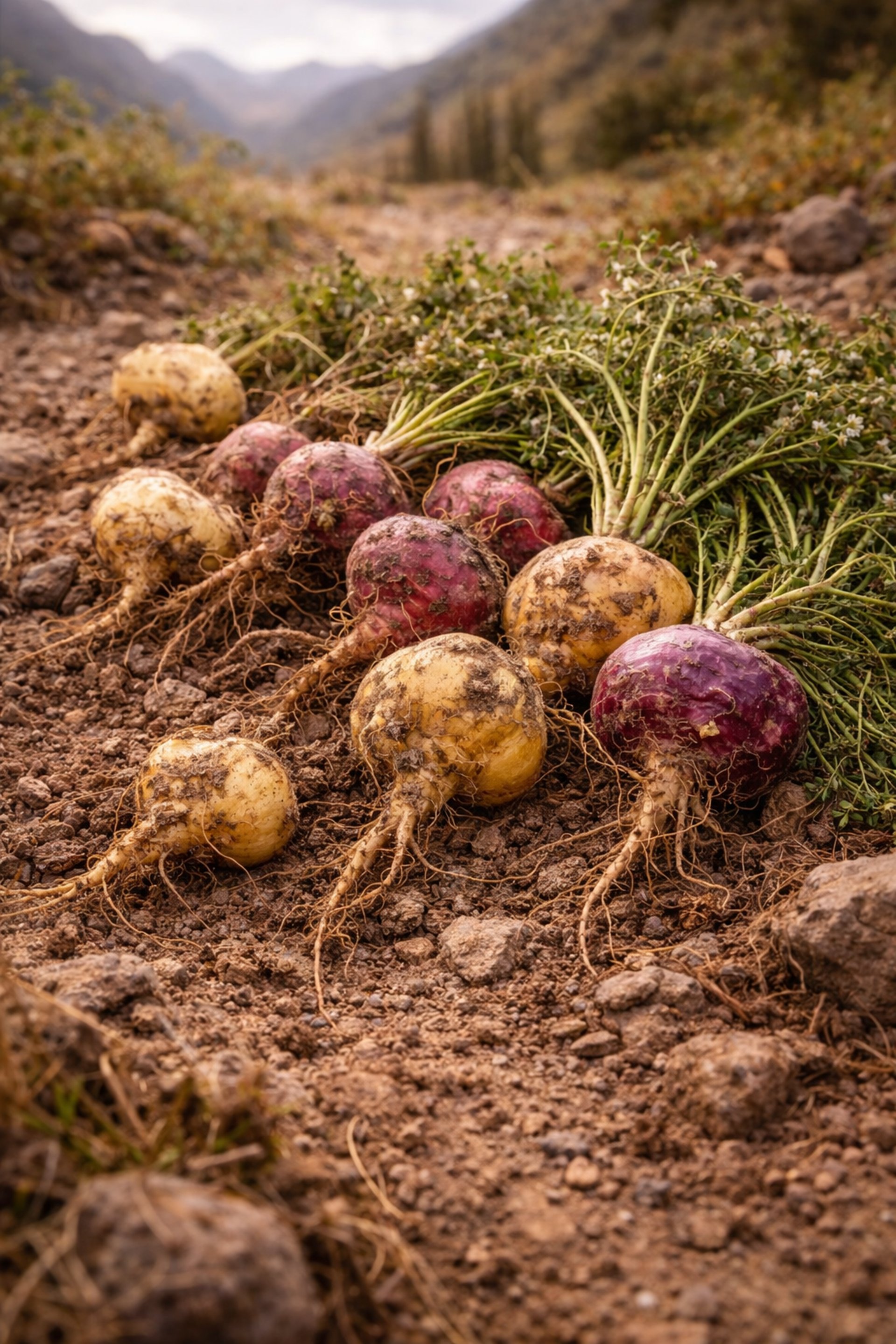
Maca
Lepidium meyenii
ROOTS AND BARK
Maca (Lepidium meyenii)
Preparation & Best Practices
Maca is most commonly used in powdered form, making it highly adaptable to a variety of preparations.
Common preparations include:
• Powders (direct use)
• Blended drinks and tonics
• Electuaries
• Capsules
Best practices include:
• Incorporating into daily routines for cumulative benefit
• Combining with warming spices such as cinnamon or ginger
• Pairing with cacao, honey, or milk-based preparations for flavor and balance
• Starting with moderate amounts and adjusting as needed
• Using consistently rather than sporadically
Maca works best when treated as a daily supportive material, rather than a short-term intervention.
Best Extraction Practices
Maca is not typically extracted in the traditional sense.
It is most effective when consumed as a whole powdered material, allowing the full range of its nutritional and plant compounds to be utilized. In some cases, it may be gelatinized (pre-cooked and processed) to improve digestibility.
Because of its nature, maca is best approached as a whole-food preparation rather than an extract.
Shelf Life in Storage
Maca powder should be stored in airtight containers in a cool, dry place away from direct light.
Approximate shelf life:
• Powder — 1–2 years
• Blended preparations — varies depending on ingredients
Proper storage helps preserve both flavor and potency.
Safety Notes
Maca is generally considered safe and well tolerated.
As with any nutritive material, it is best introduced gradually and used in appropriate amounts. Individual response may vary, particularly with long-term or higher intake.
Energetic & Ritual Associations
Maca is considered warming, grounding, and building. It is often used when there is a need for sustained energy, resilience, and replenishment.
Symbolically, it is associated with strength, endurance, and vitality, reflecting its origin in extreme environments and its role as a sustaining food source.
It carries a sense of steady growth and long-term support, offering nourishment that builds gradually rather than quickly.
In the Archive With…
Often associated with tonic and nourishing formulations, including:
Ashwagandha
Eleuthero
Rhodiola
Cacao
Honey
These herbs and materials frequently appear in preparations intended to support energy, resilience, and long-term vitality, working together to create blends that are both strengthening and sustaining.
Identity & Origin
Maca (Lepidium meyenii) is a root vegetable in the Brassicaceae family, native to the high-altitude regions of the Peruvian Andes. It has been cultivated for thousands of years in some of the harshest growing conditions on earth, thriving in cold, windy environments with intense sun exposure and poor soils.
The plant grows low to the ground, producing a small, turnip-like root that develops beneath the surface. It is this root that is harvested, dried, and traditionally prepared as both a food and a functional plant material.
Maca has long been used as a staple crop in Andean culture, valued not only for nourishment but for its ability to sustain energy and resilience in extreme conditions.
Appearance & Character
Maca root is typically dried and ground into a fine powder, ranging in color from pale yellow to deep brown, depending on the variety. In its whole form, it resembles a small, rounded root with a firm, dense structure.
The powder has a distinct aroma—earthy, slightly sweet, and somewhat malty. Its flavor is rich and grounding, with notes that are often described as nutty or caramel-like, though still rooted in its vegetal origin.
Maca carries a warming, building, and sustaining character. It does not act quickly or sharply, but instead works gradually, contributing to a sense of endurance, steadiness, and long-term vitality.
Key Minerals & Constituents
Maca contains a broad range of nutritional and plant compounds that contribute to its traditional use.
Key constituents include:
• Amino acids
• Fatty acids
• Glucosinolates
• Alkaloids
• Vitamins and trace minerals
These contribute to its role as a nutritive and tonic root, supporting the body through nourishment and sustained use rather than immediate effect.
Historical & Cultural Context
Maca has been cultivated in the Andes for over 2,000 years, where it has served as both a food source and a functional plant within traditional systems.
It was historically consumed by indigenous communities as part of the daily diet, particularly valued for its ability to support strength and endurance in high-altitude environments. It has also been associated with fertility, vitality, and overall resilience.
Unlike many herbs that are used occasionally or situationally, maca has traditionally been used as a regular, integrated part of life, reflecting its role as a nourishing and sustaining plant.
Uses in Apothecary Work
In herbal practice, maca is used to support:
• Energy and endurance
• General vitality and nourishment
• Long-term tonic formulations
• Daily nutritional support
• Blended powders and elixirs
Maca is best understood as a food-like tonic, bridging the space between nourishment and herbal practice.
It is often used as a base or foundational ingredient in formulations designed to build over time, rather than produce immediate or targeted effects.

Contact
info@wildmedicineguide.com
+1-470-304-8111
© 2026 Wild Medicine Apothecary LLC. All rights reserved.
Kennesaw, GA
Wild Medicine Apothecary LLC provides educational information and professional tools for general informational purposes. Content and resources do not constitute legal advice, medical advice, or regulatory certification.
Herbalism, formulation, folklore, research, and small-batch apothecary work under one roof.
From plant monographs and seasonal features to cosmetic formulation, maker education, and practical documentation systems.
Wild Medicine Apothecary


Check out my other rantings at Brainz Magazine
Root around on our socials here