
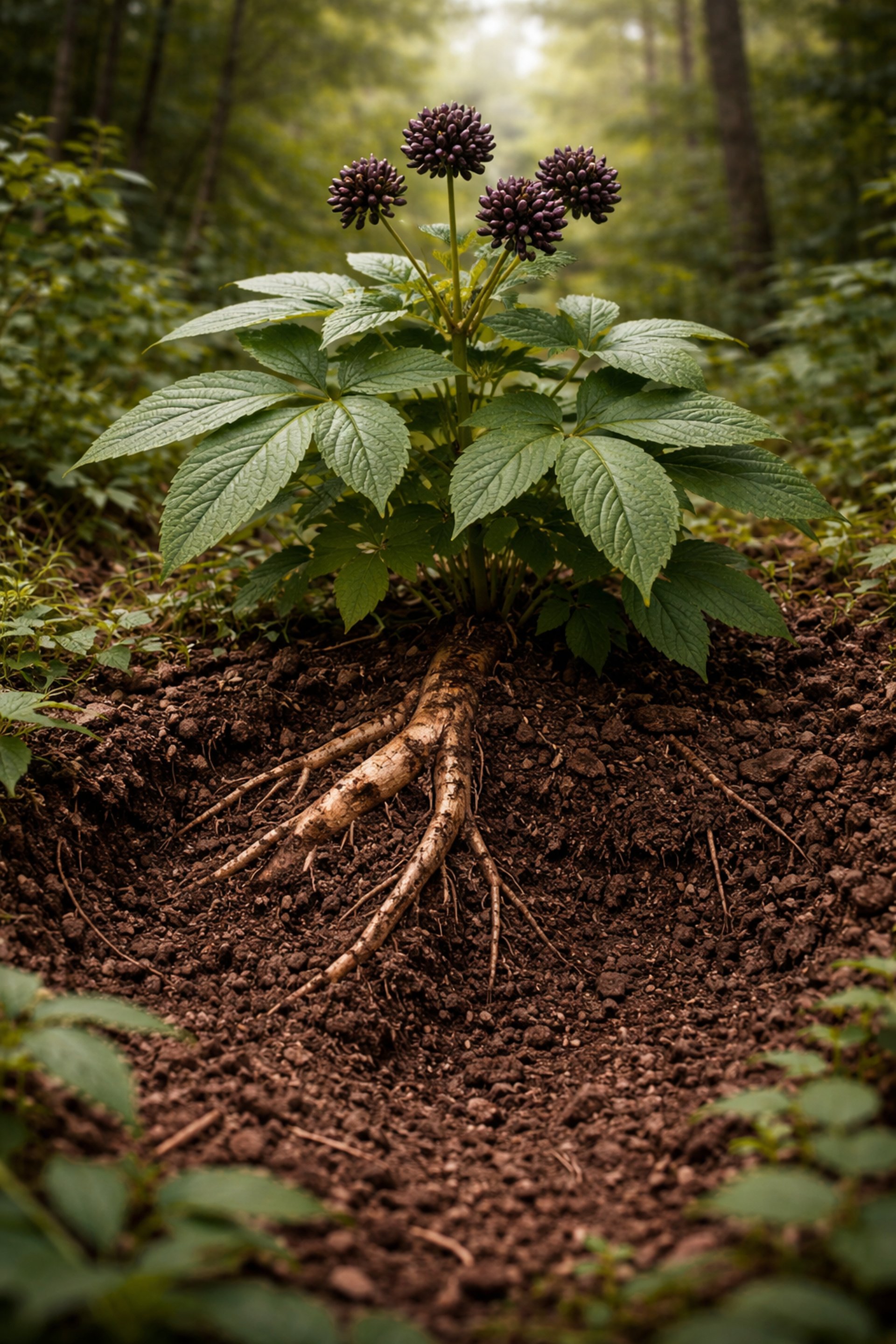
Eleuthero
Eleutherococcus senticosus
ROOTS AND BARK
Eleuthero (eleutherococcus senticosus)
Preparation & Best Practices
Eleuthero is commonly prepared in several traditional ways.
Common preparations include:
• Decoctions
• Tinctures
• Tonic formulas
Best practices include:
• Use decoction for full-bodied root extraction
• Use tincture for convenient and concentrated preparations
• Combine with herbs like astragalus, licorice, or ginger in tonic blends
• Pair with rhodiola for more dynamic, adaptive formulations
• Use consistently over time for cumulative effects
• Incorporate into daily or long-term herbal routines
Eleuthero is most effective when used as a long-term tonic, rather than an occasional or short-term herb.
Best Extraction Practices
Eleuthero root is best extracted through:
• Decoction
• Alcohol (tincture)
Decoction is effective for extracting:
• Water-soluble compounds
• Polysaccharides and deeper root constituents
Tincture provides a:
• Concentrated and stable preparation
• Broad-spectrum extraction of active compounds
Because of its dense root structure, eleuthero benefits from longer extraction times and thorough preparation.
Shelf Life in Storage
Eleuthero root should be stored in:
• Airtight containers
• Cool, dry conditions
• Away from direct light
Approximate shelf life:
• Dried root — 2–3 years
• Tincture — 3–5+ years
• Decoction — 24–48 hours refrigerated
Safety Notes
Eleuthero is generally considered safe when used appropriately.
Important considerations include:
• Best used consistently rather than in excess
• Monitor individual response
• Use thoughtfully in long-term formulations
It is typically well-tolerated and widely used in traditional herbal practice.
Energetic & Ritual Associations
In traditional herbal energetics, eleuthero is often considered warming, strengthening, and stabilizing, with a strong affinity for building resilience over time.
It is frequently used when there is fatigue, depletion, or prolonged stress, especially in individuals who need sustained support rather than immediate stimulation.
Symbolically, eleuthero is associated with endurance, adaptability, and quiet strength, reflecting its growth in harsh climates and its role in supporting long-term capacity.
It has long been regarded as a plant that helps the body and mind withstand pressure without collapse, offering support in cultivating steadiness, resilience, and sustainable energy.
In the Archive With…
Often associated with roots and tonic formulations intended to support resilience, endurance, and long-term balance, including:
Astragalus Root
Licorice Root
Ginger
Rhodiola
Decoction
These herbs and methods frequently appear in preparations intended to support strength, recovery, and sustained vitality.
Identity & Origin
Eleuthero (Eleutherococcus senticosus), commonly known as Siberian ginseng, belongs to the Araliaceae family.
It is native to northeastern Asia, particularly Siberia, northern China, Korea, and parts of Russia, where it grows in forests, mountain regions, and cold, rugged environments.
Key identifying features include:
• A woody shrub with thorny stems
• Palmate leaves composed of multiple leaflets
• Small, dark berries (not typically used)
• A hardy growth pattern adapted to harsh climates
Parts traditionally used:
• Root
Eleuthero’s native environment—cold, demanding, and variable—closely reflects its traditional use as a plant associated with endurance and adaptability.
Appearance & Character
Eleuthero root appears as:
• Woody, fibrous root pieces
• Light brown to tan exterior with pale interior
• Dense and slightly tough texture
Its taste is:
• Mildly bitter
• Slightly sweet
• Earthy and grounding
Its aroma is subtle and root-like.
Its character is:
• Steady
• Grounding
• Strengthening without heaviness
Eleuthero does not feel sharp or stimulating in an immediate sense; instead, it has a slow-building, supportive presence that reflects its role as a long-term tonic herb.
Key Minerals & Constituents
Eleuthero contains a variety of compounds that contribute to its traditional use.
Key constituents include:
• Eleutherosides
• Polysaccharides
• Flavonoids
• Triterpenoid saponins
These contribute to its role as a tonic and adaptogenic root, traditionally used to support resilience and overall system balance.
Historical & Cultural Context
Eleuthero has a long history of use in Traditional Chinese Medicine and Russian herbal practice, where it has been valued as a strengthening and endurance-supporting plant.
It became especially well known in modern times through its use in:
• Traditional tonic formulations
• Physical endurance support
• Adaptation to environmental and physical stress
In Russian herbal and scientific traditions, eleuthero was studied and used to support individuals in demanding physical and mental conditions, including labor, athletics, and extreme climates.
Its reputation reflects a plant associated with endurance, resilience, and sustained capacity, rather than quick or stimulating effects.
Uses in Apothecary Work
In herbal practice, eleuthero is commonly used to support:
• Long-term energy and endurance
• Adaptation to stress and environmental demands
• Physical and mental resilience
• Recovery from periods of strain or depletion
• General tonic and strengthening formulations
Commonly used parts
• Root — tinctures, decoctions, and compound formulas
Eleuthero is especially valued in formulations intended to build capacity over time, rather than provide immediate or short-term stimulation.
It is often included in blends that support consistency, stamina, and sustained output.

Contact
info@wildmedicineguide.com
+1-470-304-8111
© 2026 Wild Medicine Apothecary LLC. All rights reserved.
Kennesaw, GA
Wild Medicine Apothecary LLC provides educational information and professional tools for general informational purposes. Content and resources do not constitute legal advice, medical advice, or regulatory certification.
Herbalism, formulation, folklore, research, and small-batch apothecary work under one roof.
From plant monographs and seasonal features to cosmetic formulation, maker education, and practical documentation systems.
Wild Medicine Apothecary


Check out my other rantings at Brainz Magazine
Root around on our socials here