
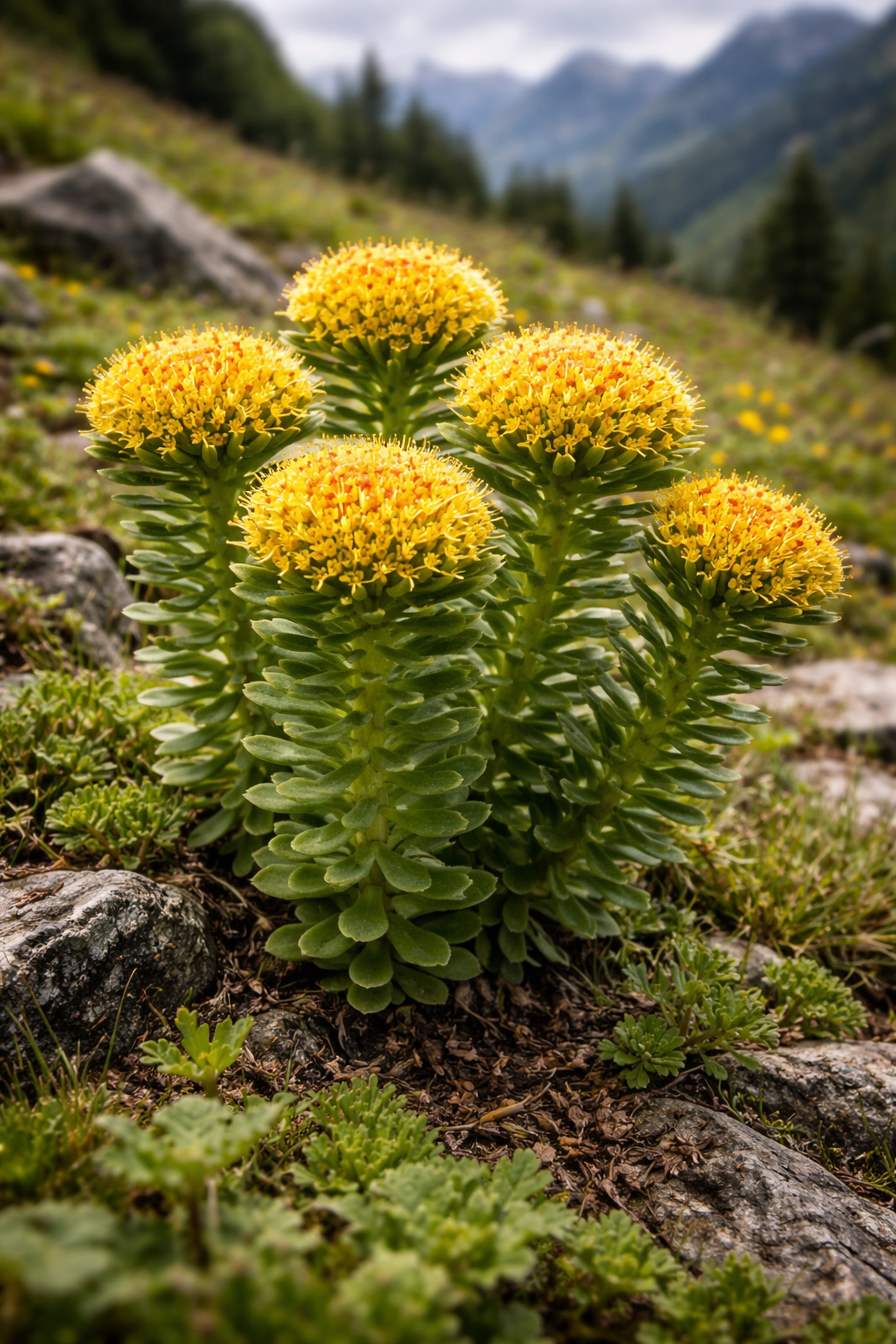
Rhodiola
Rhodiola rosea
ROOTS AND BARK
Rhodiola (Rhodiola rosea)
Preparation & Best Practices
Rhodiola is commonly prepared in several traditional ways.
Common preparations include:
• Tinctures
• Decoctions
• Tonic blends
Best practices include:
• Use tincture for a concentrated and efficient preparation
• Use decoction for traditional root extraction
• Combine with eleuthero, astragalus, or licorice in tonic formulas
• Pair with ginger to support digestion and warmth
• Use in moderate amounts, as its effects can be noticeable
• Incorporate into daily or structured routines, rather than sporadic use
Rhodiola works well in formulas that support adaptation, clarity, and sustained performance.
Best Extraction Practices
Rhodiola root is best extracted through:
• Alcohol (tincture)
• Decoction
Tincture is often preferred for:
• Concentrated extraction
• Stability and ease of use
• Capturing a broad range of active compounds
Decoction provides:
• Traditional root extraction
• Access to water-soluble constituents
Due to its dense root structure, rhodiola benefits from thorough preparation and proper extraction methods.
Shelf Life in Storage
Rhodiola root should be stored in:
• Airtight containers
• Cool, dry conditions
• Away from direct light
Approximate shelf life:
• Dried root — 2–3 years
• Tincture — 3–5+ years
• Decoction — 24–48 hours refrigerated
Safety Notes
Rhodiola is generally considered safe when used appropriately.
Important considerations include:
• Effects may be noticeable, especially in concentrated forms
• Best used in moderate amounts
• Monitor individual response
As with many adaptogenic herbs, it is best used intentionally and with awareness of individual sensitivity.
Energetic & Ritual Associations
In traditional herbal energetics, rhodiola is often considered warming, uplifting, and adaptive, with a strong affinity for supporting resilience in dynamic or demanding situations.
It is frequently used when there is fatigue combined with the need for clarity, responsiveness, and continued output, especially in individuals navigating changing or high-pressure environments.
Symbolically, rhodiola is associated with adaptation, clarity under pressure, and resilient movement, reflecting its growth in extreme climates and its role in supporting flexible strength.
It has long been regarded as a plant that helps one rise to meet challenges without depletion, offering support in maintaining both presence and endurance in the face of ongoing demands.
In the Archive With…
Often associated with roots and tonic formulations intended to support adaptation, resilience, and sustained performance, including:
Eleuthero
Astragalus Root
Licorice Root
Ginger
Tincture
These herbs frequently appear in preparations intended to support endurance, recovery, and adaptive capacity.
Identity & Origin
Rhodiola (Rhodiola rosea) belongs to the Crassulaceae family.
It is native to cold, mountainous, and arctic regions of Europe, Asia, and North America, including Scandinavia, Russia, Siberia, and high-altitude environments.
Key identifying features include:
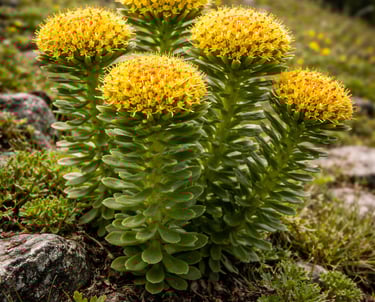
• A low-growing, succulent perennial
• Thick, fleshy leaves adapted to harsh climates
• Clusters of yellow to reddish flowers
• A dense, fibrous root system
Parts traditionally used:
• Root
Rhodiola thrives in extreme environments, including rocky slopes, high elevations, and cold climates—conditions that reflect its traditional role as a plant of adaptation and resilience under pressure.
Appearance & Character
Rhodiola root appears as:
• Dense, woody root pieces
• Light brown to golden exterior
• Yellowish interior
Its taste is:
• Bitter
• Slightly astringent
• Mildly sweet
Its aroma is distinctive:
• Slightly floral
• Rose-like when fresh or freshly cut
Its character is:
• Uplifting
• Clarifying
• Light but resilient
Rhodiola feels more immediate and responsive than heavier tonic roots, with a quality that is both grounding and subtly elevating.
Key Minerals & Constituents
Rhodiola contains a range of compounds that contribute to its traditional use.
Key constituents include:
• Rosavins
• Salidroside
• Flavonoids
• Phenolic compounds
These contribute to its role as an adaptogenic and tonic root, particularly suited to supporting the body’s response to stress and exertion.
Historical & Cultural Context
Rhodiola has been used for centuries in European, Russian, and Asian herbal traditions, especially in regions with harsh climates and demanding living conditions.
It has historically been used to support:
• Physical endurance
• Mental clarity
• Adaptation to extreme environments
In Russian and Scandinavian traditions, rhodiola became known as a plant for enhancing stamina, performance, and resilience, particularly in high-stress or physically demanding situations.
It has long been associated with individuals who must remain alert, capable, and adaptable under pressure.
Uses in Apothecary Work
In herbal practice, rhodiola is commonly used to support:
• Adaptation to stress
• Mental clarity and focus
• Physical and mental endurance
• Recovery from fatigue
• Performance under demanding conditions
Commonly used parts
• Root — tinctures, decoctions, and blended formulas
Rhodiola is especially valued for its ability to provide responsive support, helping the body adjust more efficiently to changing demands.
It is often included in formulations intended to support alertness, clarity, and adaptive capacity, rather than simple stimulation.

Contact
info@wildmedicineguide.com
+1-470-304-8111
© 2026 Wild Medicine Apothecary LLC. All rights reserved.
Kennesaw, GA
Wild Medicine Apothecary LLC provides educational information and professional tools for general informational purposes. Content and resources do not constitute legal advice, medical advice, or regulatory certification.
Herbalism, formulation, folklore, research, and small-batch apothecary work under one roof.
From plant monographs and seasonal features to cosmetic formulation, maker education, and practical documentation systems.
Wild Medicine Apothecary


Check out my other rantings at Brainz Magazine
Root around on our socials here