
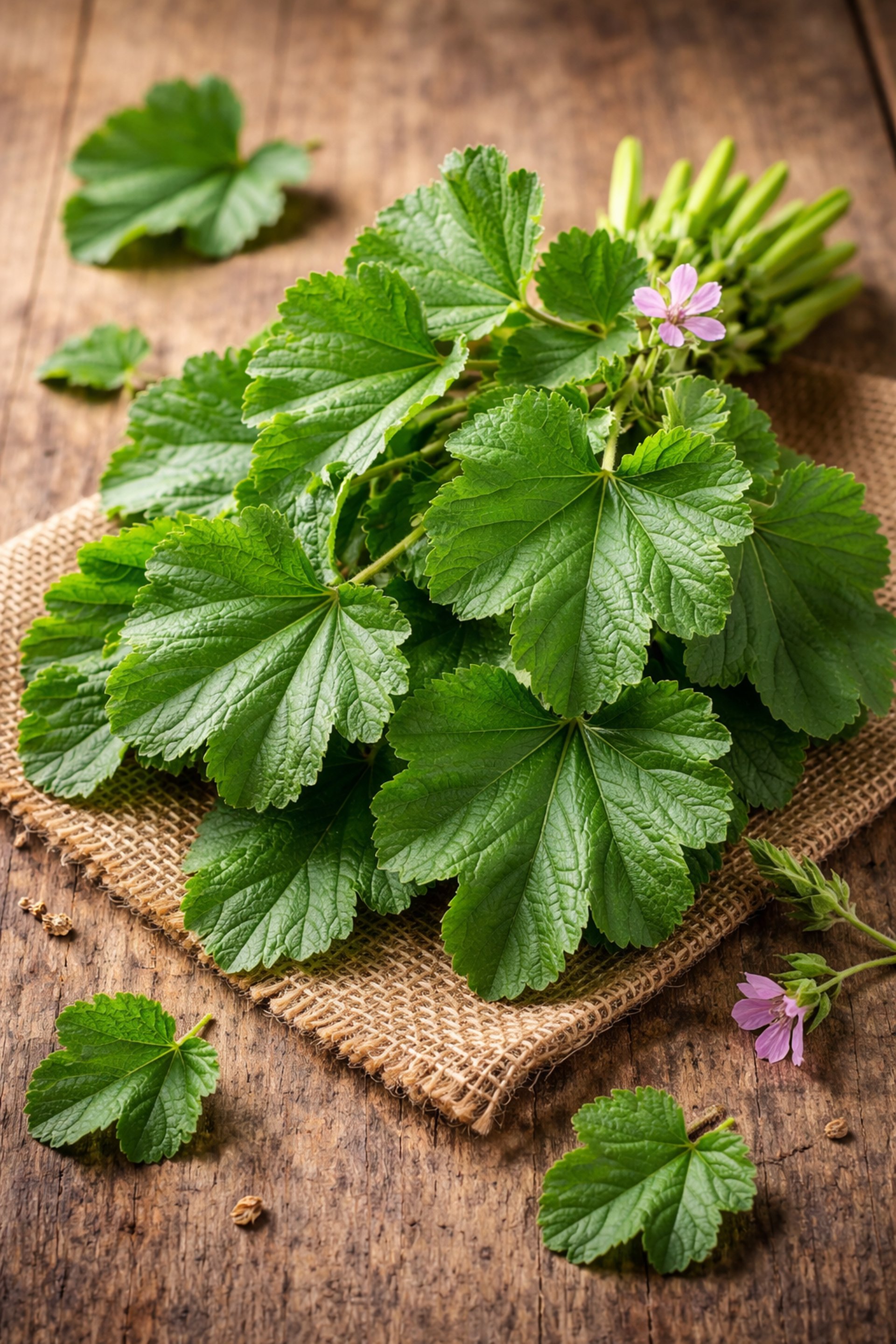
Mallow
Malva sylvestris / Malva spp
FLOWERSLEAVES & AERIAL HERBS
Mallow (Malva sylvestris / Malva spp.)
Preparation & Best Practices
Mallow is commonly prepared in several traditional ways.
Common preparations include:
• Herbal infusions from leaves and flowers
• Cold infusions to preserve mucilage content
• Syrups for soothing blends
• Poultices for topical use
• Infused oils for gentle skin preparations
Best practices include:
• Use cool to warm water to preserve mucilage
• Avoid excessive heat when possible
• Harvest leaves and flowers during active growth
• Combine with marshmallow, slippery elm, or plantain in demulcent blends
• Use fresh plant material when available for optimal texture
Mallow’s effectiveness is closely tied to preserving its gel-like mucilage content.
Best Extraction Practices
Mallow extracts best through gentle, water-based preparations.
Recommended methods:
• Leaf — cold infusion or gentle infusion
• Flower — infusion or syrup
• Root — cold infusion or light decoction
Cold infusion is often preferred to preserve the plant’s soothing mucilage properties.
Shelf Life in Storage
Properly dried mallow should be stored in airtight containers in a cool, dry place away from light.
Approximate shelf life:
• Leaves: 1–2 years
• Flowers: 1 year
• Root: 2–3 years
• Syrups: several months refrigerated
Dried material should retain a soft green color and mild aroma.
Safety Notes
Mallow is generally considered a very gentle and well-tolerated herb.
Important considerations include:
• Its mucilage content may slow absorption of medications, so space timing if needed
• Introduce gradually when trying new herbs
It is widely used in traditional herbal practice for its mild and soothing nature.
Energetic & Ritual Associations
In traditional herbal energetics, mallow is often considered cooling, moistening, and softening.
It is frequently used when tissues feel dry, irritated, or inflamed, helping to restore comfort and balance.
Symbolically, mallow has long been associated with gentleness, nourishment, and emotional softening, reflecting its ability to soothe both physical and energetic tension.
In the Archive With…
Often associated with herbs traditionally used for soothing and demulcent support, including:
Marshmallow
Slippery Elm
Plantain
Violet
Rose
These herbs frequently appear in preparations intended to support moisture balance, tissue protection, and gentle nourishment.
Appearance & Character
Mallow is a soft, spreading herb with rounded, gently lobed leaves and delicate purple-pink flowers marked with darker veins. The plant grows low to the ground or in loose upright clusters, often found along roadsides, in gardens, and in open fields.
The leaves are soft, slightly fuzzy, and circular with scalloped edges, while the flowers are five-petaled and range from pale pink to vibrant purple with distinctive striping.
When fresh or infused, both the leaves and flowers develop a slightly thick, slippery texture due to their mucilage content.
The flavor is mild, green, and slightly sweet, with very little bitterness.
When dried, the leaves become fragile and muted green, while the flowers retain some of their color if preserved carefully.
Identity & Origin
Mallow refers to several species in the Malvaceae family, most commonly:
• Malva sylvestris (common mallow)
• Malva neglecta (common/low mallow)
It is native to Europe, North Africa, and Asia, and is now widely naturalized throughout North America and other temperate regions.
Key identifying features include:
• Leaf: round, softly lobed leaves with a velvety texture
• Flower: five-petaled pink to purple flowers with darker veins
• Growth habit: low-growing or sprawling herb
• Texture: mucilaginous when moistened
Common names include:
• Mallow
• Common mallow
• High mallow
• Cheeseweed (from the seed shape)
Parts traditionally used:
• Leaf
• Flower
• Root (less commonly than marshmallow, but still used)
Key Minerals & Constituents
Mallow contains a range of gentle compounds that contribute to its soothing and moistening properties.
Key constituents include:
• Mucilage
• Flavonoids
• Tannins (mild)
• Anthocyanins (in flowers)
• Polysaccharides
These compounds contribute to mallow’s role as a demulcent herb traditionally used to soothe and protect tissues.
Historical & Cultural Context
Mallow has been used as both food and medicine for thousands of years across European, Middle Eastern, and Mediterranean traditions.
The plant was commonly gathered as a wild edible green, and its soothing properties made it a staple in traditional herbal preparations for both internal and external use.
In ancient herbal texts, mallow was often described as a plant that could soften and soothe, reflecting its mucilaginous qualities.
Because of its abundance and gentle nature, mallow became a common household herb in many traditional systems of medicine.
Uses in Apothecary Work
In herbal practice, mallow is commonly used to support:
• Tissue soothing and moisture balance
• Respiratory comfort
• Digestive soothing
• Skin-supportive preparations
• Gentle lymphatic support
Commonly used parts
• Leaf — infusions, poultices, and soothing preparations
• Flower — infusions, syrups, and gentle blends
• Root — decoctions or cold infusions (less commonly used than marshmallow)
Mallow is often included in formulas intended to soften, coat, and soothe irritated tissues.

Contact
info@wildmedicineguide.com
+1-470-304-8111
© 2026 Wild Medicine Apothecary LLC. All rights reserved.
Kennesaw, GA
Wild Medicine Apothecary LLC provides educational information and professional tools for general informational purposes. Content and resources do not constitute legal advice, medical advice, or regulatory certification.
Herbalism, formulation, folklore, research, and small-batch apothecary work under one roof.
From plant monographs and seasonal features to cosmetic formulation, maker education, and practical documentation systems.
Wild Medicine Apothecary


Check out my other rantings at Brainz Magazine
Root around on our socials here