
Plantain
Musa × Paradisiaca (syn Musa Sapientum)
LEAVES & AERIAL HERBS
Plantain (Musa Sapientum)


Best Practices
Plantain is commonly prepared in several traditional ways, particularly for topical and soothing applications.
Common preparations include:
• Fresh poultices
• Infused oils
• Salves and balms
• Infusions and washes
Best practices include:
• Crush or chew fresh leaves to create immediate poultices for topical use
• Infuse dried leaf into carrier oils for salves and skin preparations
• Prepare as an infusion for gentle internal or external use
• Combine with calendula or comfrey in skin-supportive formulations
• Pair with marshmallow or slippery elm for soothing, demulcent blends
• Use fresh plant when possible for strongest topical activity
Plantain is especially well suited for preparations that emphasize drawing, soothing, and surface-level support, making it a staple in topical herbal work.
Best Extraction Practices
Plantain extracts well across multiple methods, depending on the intended use.
Key extraction methods include:
• Leaf — infusion (primary)
• Leaf — tincture
• Leaf — oil infusion (topical use)
• Seed — infusion or powder
Important considerations include:
• Water-based preparations effectively extract its soothing and supportive compounds
• Oil infusions are ideal for topical applications, especially in salves
• Tinctures provide a more concentrated extract for internal use
• Seeds can be prepared similarly to other mucilaginous materials, releasing soothing compounds when hydrated
Plantain is a versatile herb, extracting well in both water and oil, making it suitable for a wide range of apothecary preparations.
Shelf Life in Storage
• Leaf — 1–2 years
• Seed — about 2 years
Safety Notes
Plantain is generally considered very gentle and safe when properly identified.
Harvest from clean environments.
Energetic & Ritual Associations
In traditional herbal energetics, plantain is often described as cooling, moistening, and soothing, particularly for irritated or inflamed tissues.
Symbolically, the plant has been associated with resilience, protection, and healing, reflecting its ability to grow in challenging environments and its long-standing role in traditional first-aid herbal practices.
In the Archive With…
Often associated with other herbs traditionally used for soothing irritated tissues and supporting skin health, including:
Calendula
Chamomile
Mallow
Chickweed
Marshmallow
These herbs are commonly used in preparations intended to calm irritation, support gentle healing, and restore balance to the body.
Appearance & Character
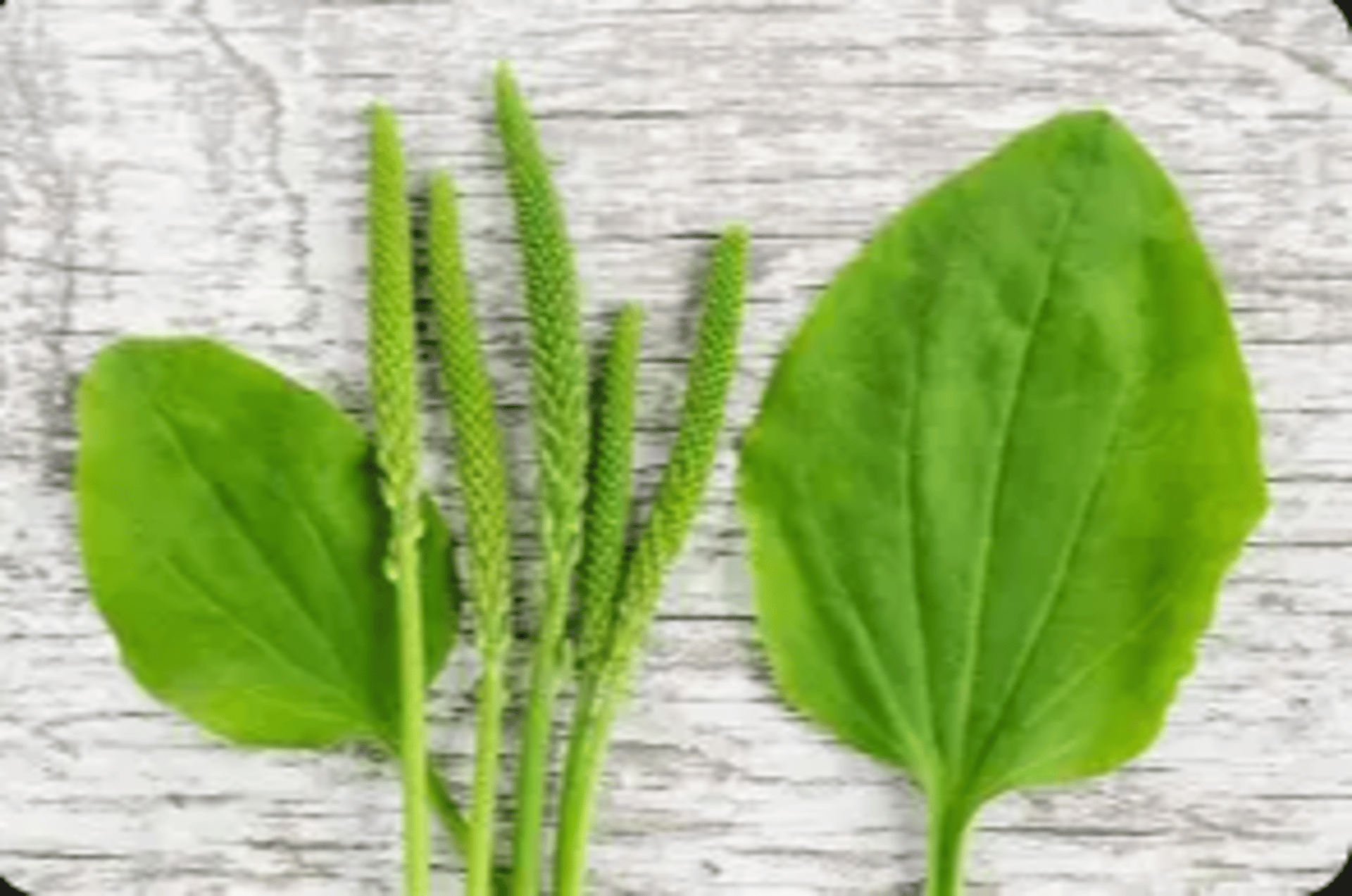
Plantain grows as a low rosette of leaves with distinct parallel veins.
• Leaves: broad or narrow green leaves depending on species
• Seeds: small brown seeds produced on tall stalks
The leaves are soft and slightly bitter with a mild green aroma.
Identity & Origin
Source: Plantago major and Plantago lanceolata
Family: Plantaginaceae
Native Region: Europe and Asia; now widespread globally
Plant Type: Perennial herb
Parts traditionally used:
• Leaf
• Seed
Key Minerals & Constituents
Key constituents include:
• Mucilage
• Tannins
• Iridoid glycosides
• Flavonoids
• Silica
These contribute to the herb’s soothing and protective qualities.
Historical & Cultural Context
Plantain has long appeared in herbal traditions across Europe and North America. The plant became widely known as a traveler’s herb, growing wherever people settled.
It has been used historically for skin applications and soothing preparations.
Uses in Apothecary Work
Plantain commonly appears in preparations supporting:
• Skin comfort
• Minor wounds and irritations
• Respiratory soothing
• Digestive comfort
Commonly used parts
• Leaf — poultices, oils, infusions
• Seed — mild mucilaginous digestive preparations
Contact
info@wildmedicineguide.com
+1-470-304-8111
© 2024. All rights reserved.
Kennesaw, GA
Wild Medicine Guide provides educational resources and professional tools. It does not provide legal advice or regulatory certification.
Wild Medicine Guide is part of the educational work of Wild Medicine Apothecary (WMA).
Wild Medicine Apothecary provides compliance education, documentation systems, and botanical reference materials for independent cosmetic brands.