
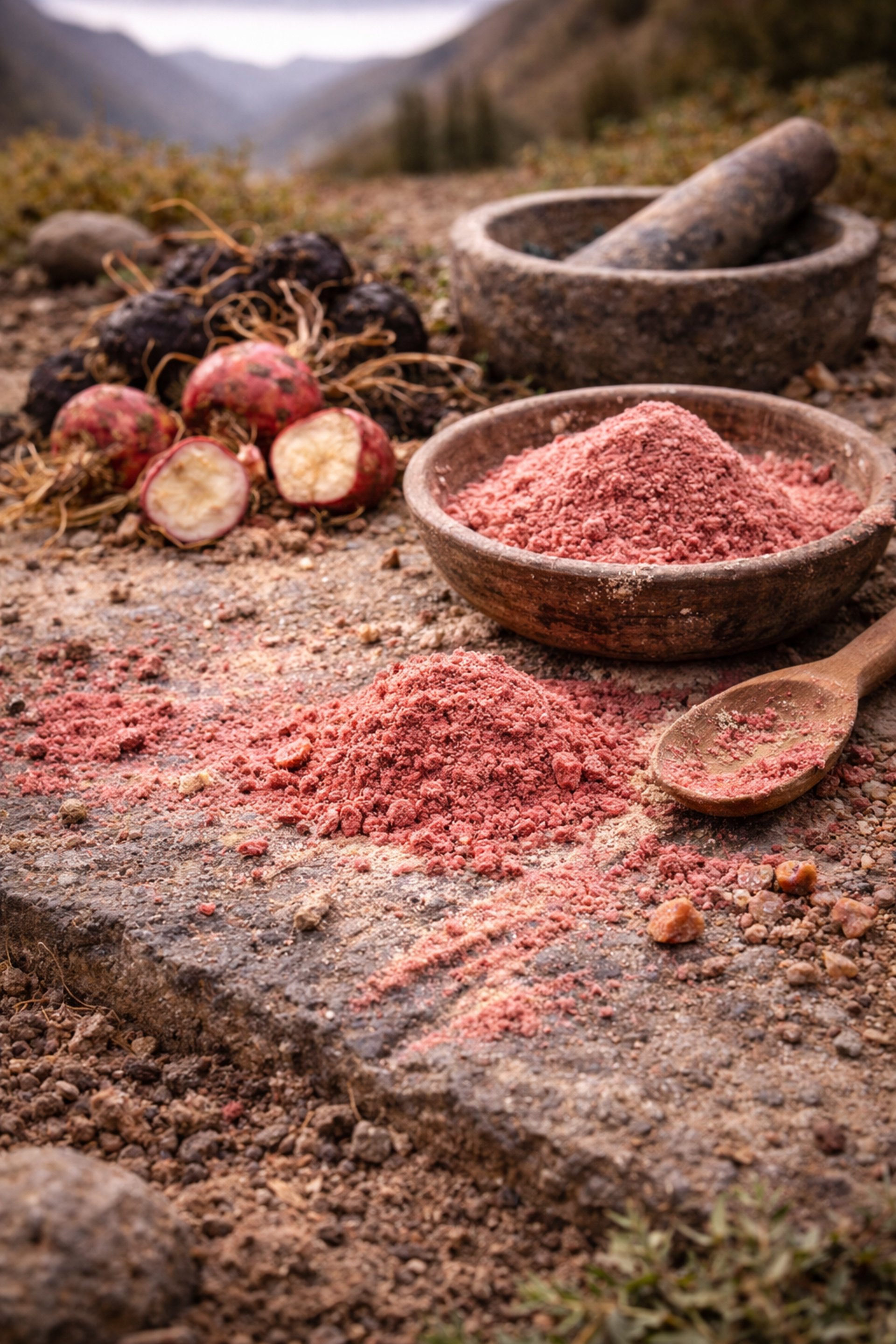
Red Maca
Lepidium meyenii
ROOTS AND BARK
Red Maca (Lepidium meyenii)
Preparation & Best Practices
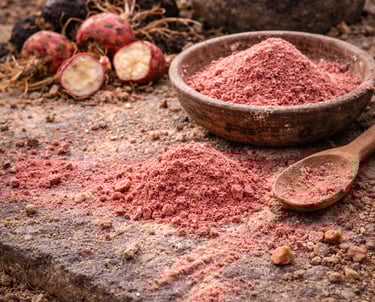
Red maca is most commonly used in powdered form, making it easy to incorporate into daily preparations.
Common preparations include:
• Powders (direct use)
• Blended drinks and tonics
• Electuaries
• Capsules
Best practices include:
• Using consistently over time for cumulative effect
• Combining with warming spices such as cinnamon or ginger
• Pairing with cacao, milk, or honey for improved flavor and integration
• Using in evening or grounding formulations when appropriate
• Adjusting amounts gradually based on individual response
Red maca is particularly well suited for steady, ongoing use, where its deeper qualities can build over time.
Best Extraction Practices
Red maca is not typically extracted in the traditional sense.
It is most effective when consumed as a whole powdered material, preserving its full range of compounds. Gelatinized forms may be used to improve digestibility if needed.
Shelf Life in Storage
Red maca powder should be stored in airtight containers in a cool, dry place away from direct light.
Approximate shelf life:
• Powder — 1–2 years
• Blended preparations — varies depending on ingredients
Proper storage helps maintain both quality and flavor.
Safety Notes
Red maca is generally considered safe and well tolerated.
As with all forms of maca, it is best introduced gradually and used consistently in appropriate amounts. Individual response may vary depending on the formulation and context.
Energetic & Ritual Associations
Red maca is considered warming, grounding, and inward-moving. It is often used when there is a need for stability, containment, and deeper restoration.
Symbolically, it is associated with rootedness, strength, and resilience, reflecting its dense nature and the harsh environments in which it grows.
It carries a sense of depth and steady support, offering nourishment that builds slowly and anchors the system over time.
In the Archive With…
Often associated with tonic and grounding formulations, including:
Maca Root (Overview)
Yellow Maca
Ashwagandha
Cacao
Honey
These materials frequently appear in preparations intended to support resilience, nourishment, and long-term vitality, working together to create blends that are steady, grounding, and deeply supportive.
Identity & Origin
Red maca is a naturally occurring variety of Lepidium meyenii, cultivated in the high-altitude regions of the Peruvian Andes. Like all maca, it grows in extreme environmental conditions, where intense sunlight, cold temperatures, and mineral-poor soils shape its development.
Among the different color varieties, red maca is less common than yellow but has long been recognized within traditional use as a distinct form with its own character and applications.
It is harvested, dried, and typically prepared as a powder, forming part of the broader maca tradition that bridges nourishment and herbal practice.
Appearance & Character
Red maca root is distinguished by its deeper coloration, ranging from reddish-gold to a muted brick tone when dried and ground into powder.
Its aroma is similar to other maca varieties but carries a slightly richer and more earthy depth. The flavor is fuller and more grounded, with less of the light sweetness found in yellow maca and more of a dense, root-like quality.
Red maca carries a grounding, inward-moving, and stabilizing character. Where yellow maca feels balanced and neutral, red maca leans more toward containment and depth, offering a sense of weight and rootedness.
It tends to feel more settling in the body, with a slower, more anchored presence.
Key Minerals & Constituents
Red maca contains the same general spectrum of compounds found in maca, with subtle variation in concentration depending on the variety.
Key constituents include:
• Amino acids
• Fatty acids
• Glucosinolates
• Alkaloids
• Vitamins and trace minerals
These contribute to its role as a nutritive, tonic root, with an emphasis on steady, grounding support.
Historical & Cultural Context
In traditional Andean use, different colors of maca have long been recognized and utilized with intention. Red maca, while less abundant than yellow, has been valued for its more focused and grounding qualities.
It has been incorporated into daily dietary practices and traditional preparations, often used in ways that support strength, stability, and long-term nourishment.
Its place within the maca system reflects a nuanced understanding of how different forms of the same plant can offer different expressions of support.
Uses in Apothecary Work
In herbal practice, red maca is used to support:
• Grounding and stabilizing formulations
• Long-term nourishment and vitality
• Tonic blends focused on depth and restoration
• Daily nutritional support
• Balanced but more inward-oriented formulations
Red maca is often chosen when a more anchoring and steady form of support is desired, particularly in contrast to more stimulating or outward-moving materials.
It works well in formulations that emphasize restoration, rebuilding, and sustained support over time.

Contact
info@wildmedicineguide.com
+1-470-304-8111
© 2026 Wild Medicine Apothecary LLC. All rights reserved.
Kennesaw, GA
Wild Medicine Apothecary LLC provides educational information and professional tools for general informational purposes. Content and resources do not constitute legal advice, medical advice, or regulatory certification.
Herbalism, formulation, folklore, research, and small-batch apothecary work under one roof.
From plant monographs and seasonal features to cosmetic formulation, maker education, and practical documentation systems.
Wild Medicine Apothecary


Check out my other rantings at Brainz Magazine
Root around on our socials here