
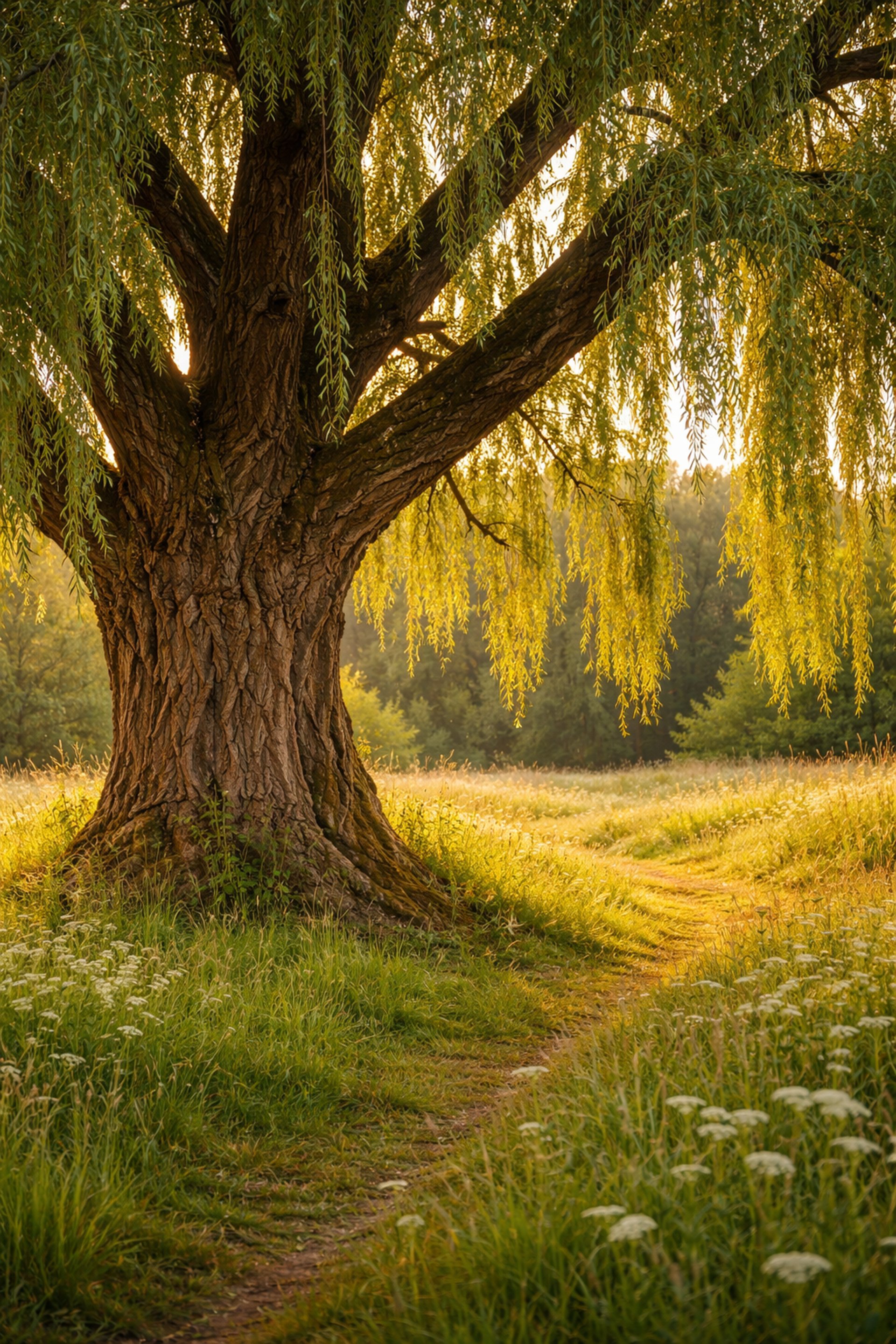
Willow Bark
Salix alba / Salix spp
ROOTS AND BARK
Willow Bark (Salix alba / Salix spp)
Preparation & Best Practices
Willow bark is commonly prepared in several traditional ways.
Common preparations include:
• Decoctions for root and bark extraction
• Alcohol tinctures for concentrated use
• Powdered bark in capsules or blends
• Inclusion in herbal formulas targeting discomfort or inflammation
Best practices include:
• Harvest bark from young branches rather than mature trunks
• Remove only small amounts to avoid damaging the tree
• Dry thoroughly before storage
• Prepare as a decoction to extract active compounds
• Combine with ginger or turmeric for warming balance
• Pair with meadowsweet or chamomile in soothing blends
Because bark is dense, proper preparation improves extraction efficiency.
Best Extraction Practices
Willow bark extracts best through heat-based and alcohol-based methods.
Recommended methods:
• Inner bark — decoction
• Inner bark — tincture
Decoction is traditionally preferred for extracting salicin and tannins, while tinctures offer a more concentrated form.
Shelf Life in Storage
Properly dried willow bark should be stored in airtight containers in a cool, dry place away from light and moisture.
Approximate shelf life:
• Dried bark: 3–5 years
• Powdered bark: 1–2 years
• Tinctures: 5 years or longer
Well-stored bark retains its bitter taste and structural integrity over time.
Safety Notes
Willow bark is a potent and traditionally used herb, but it should be used with awareness.
Important considerations include:
• Avoid in individuals sensitive to salicylates
• Use caution alongside blood-thinning medications
• Not typically recommended for children in fever contexts without guidance
• Introduce gradually to assess tolerance
Moderate and appropriate use is recommended.
Energetic & Ritual Associations
In traditional herbal energetics, willow is often considered cooling, drying, and soothing to inflammation and excess heat.
It is frequently used when the body presents with heat, tension, or discomfort, helping to restore balance and ease.
Symbolically, willow has long been associated with flexibility, emotional release, and resilience, reflecting its ability to bend without breaking and its close relationship to water.
In the Archive With…
Often associated with herbs traditionally used for pain, inflammation, and circulatory support, including:
Ginger
Turmeric
Yarrow
Chamomile
Peppermint
These herbs frequently appear in preparations intended to support inflammatory balance, circulation, and physical comfort.
Appearance & Character
Willow is a graceful deciduous tree recognized for its long, slender leaves and flexible, often drooping branches, commonly found growing near water sources such as rivers, wetlands, and low-lying areas.
The leaves are narrow and lance-shaped with finely serrated edges, typically green on top and lighter or silvery underneath. The bark varies depending on age, with younger branches having smoother surfaces and older trees developing rough, fissured bark.
The medicinal portion is the inner bark, which lies just beneath the outer layer. When harvested and dried, willow bark appears as thin, curled strips or chips, with a pale inner surface and darker outer bark.
The taste is distinctly bitter and slightly astringent, with a mild earthy quality.
Identity & Origin
Willow refers to multiple species within the Salix genus, most commonly:
• Salix alba (white willow)
• Salix nigra (black willow)
• Other regional Salix species used similarly
It belongs to the Salicaceae family and is native to Europe, Asia, and North America, where it grows abundantly in moist environments.
Key identifying features include:
• Leaf: long, narrow, finely serrated leaves
• Branch: flexible, often drooping branches
• Bark: layered bark with accessible inner medicinal layer
• Growth habit: medium to large deciduous tree, often near water
Common names include:
• Willow
• White willow
• Willow bark
Parts traditionally used:
• Inner bark
Key Minerals & Constituents
Willow bark contains several compounds associated with its traditional use in herbal medicine.
Key constituents include:
• Salicin
• Flavonoids
• Tannins
• Polyphenols
Salicin is a compound that the body can convert into salicylic acid, contributing to willow’s long-standing role in pain and inflammation support.
Historical & Cultural Context
Willow bark has been used for thousands of years across multiple cultures.
Ancient Egyptian, Greek, and Chinese medical traditions all documented the use of willow for pain, fever, and inflammation. The Greek physician Hippocrates is often credited with describing its use for relieving discomfort.
In the 19th century, compounds derived from willow bark contributed to the development of acetylsalicylic acid (aspirin), linking the plant directly to modern pharmacology.
Beyond its medicinal use, willow has held symbolic significance in many cultures, often associated with water, flexibility, and emotional expression, reflecting both its habitat and physical form.
Uses in Apothecary Work
In herbal practice, willow bark is commonly used to support:
• Occasional pain and discomfort
• Inflammatory conditions
• Musculoskeletal support
• Fever management
• Circulatory balance
Commonly used parts
• Inner bark — decoctions, tinctures, powdered preparations
Willow is often included in formulas intended to gently ease discomfort and support the body’s natural inflammatory response.

Contact
info@wildmedicineguide.com
+1-470-304-8111
© 2026 Wild Medicine Apothecary LLC. All rights reserved.
Kennesaw, GA
Wild Medicine Apothecary LLC provides educational information and professional tools for general informational purposes. Content and resources do not constitute legal advice, medical advice, or regulatory certification.
Herbalism, formulation, folklore, research, and small-batch apothecary work under one roof.
From plant monographs and seasonal features to cosmetic formulation, maker education, and practical documentation systems.
Wild Medicine Apothecary


Check out my other rantings at Brainz Magazine
Root around on our socials here