
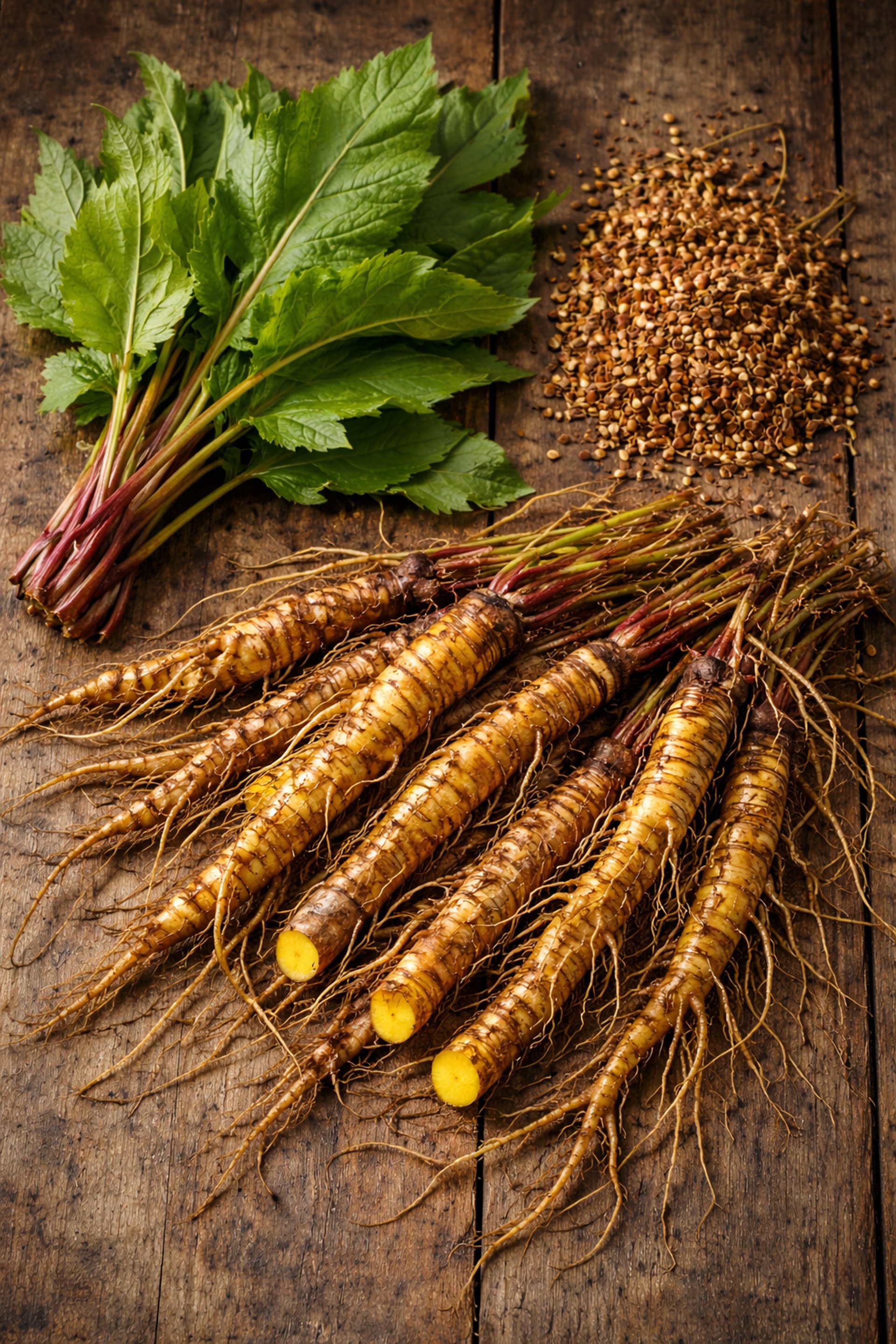
Yellow Dock
Rumex crispus
ROOTS AND BARK
Yellow Dock Root (Rumex crispus)
Preparation & Best Practices
Yellow dock is commonly prepared in several traditional ways.
Common preparations include:
• Decoctions (primary method)
• Tinctures
• Powdered root in formulas
Best practices include:
• Prepare as a decoction to extract its dense root constituents
• Slice or chop root before preparation to improve extraction
• Combine with dandelion or burdock in traditional bitter formulas
• Pair with nutritive herbs like nettle for balanced formulations
• Use consistently in longer-term protocols rather than short-term use
Yellow dock is often included in formulations intended to support digestive function and gradual systemic balance.
Best Extraction Practices
Extraction depends on the plant part used.
Root
• Best prepared as a decoction
• Alcohol tinctures extract bitter compounds effectively
Leaves
• Often prepared as infusions or fresh greens
• Can be used in topical preparations
Seeds
• May be used in mild decoctions or powdered preparations
The root remains the most commonly used medicinal portion.
Shelf Life in Storage
Shelf life varies depending on the plant part.
• Dried root: 2–3 years
• Dried leaves: 1–2 years
• Seeds: 2 years when properly dried
Store all plant material:
• Airtight
• Cool and dry
• Away from light
Safety Notes
Yellow dock is generally considered safe when used appropriately.
Important considerations:
• Leaves contain oxalic acid, which may be irritating in large quantities
• Individuals with kidney stone concerns should use caution
• Strong bitters may be stimulating for sensitive digestion
Moderate use is generally well tolerated.
Energetic & Ritual Associations
In traditional herbal energetics, yellow dock is often considered cooling, drying, and stimulating to digestion and elimination. It is frequently used when systems feel sluggish or congested and require gentle encouragement toward movement and balance.
Symbolically, yellow dock has been associated with clearing stagnation and restoring flow, reflecting its traditional role in herbal preparations that support renewal and metabolic balance.
In the Archive With…
Often associated with other herbs traditionally used for digestive and metabolic support, including:
Dandelion
Burdock
Gentian
Red Clover
Nettle
These herbs frequently appear in preparations intended to support liver function, digestion, and gradual detoxification.
Appearance & Character
Yellow dock is a tall, upright plant with long, narrow leaves that have distinctive wavy edges. The leaves grow in basal clusters near the ground, while the flowering stalk rises high above the plant.
The plant produces clusters of small greenish flowers that mature into reddish-brown seed heads.
Medicinal material appears in several forms:
• Root: dark brown exterior with a bright yellow interior
• Leaves: long, smooth green leaves with curled edges
• Seeds: small, rust-colored triangular seeds
• Powdered root: warm yellow-brown powder
The root has a distinct bitter taste, while the leaves are mildly sour due to oxalic acid.
Identity & Origin
Source: Rumex crispus
Family: Polygonaceae
Native Region: Europe and Western Asia; now widely naturalized throughout North America
Plant Type: Perennial herb
Common names include:
• Yellow dock
• Curly dock
• Narrowleaf dock
• Curled dock
Parts traditionally used include:
• Root
• Leaves
• Seeds
Key Minerals & Constituents
Yellow dock contains a range of compounds that contribute to its traditional uses.
Key constituents include:
• Anthraquinone glycosides
• Tannins
• Bitter compounds
• Iron and other trace minerals
• Oxalic acid (primarily in leaves)
• Flavonoids
These compounds contribute to the plant’s digestive, mineral-supportive, and mildly stimulating properties.
Historical & Cultural Context
Yellow dock has appeared in herbal traditions across Europe and North America for centuries. Rural herbalists often valued the plant as a versatile remedy, making use of the root for digestive formulas and occasionally using the young leaves as a spring green.
Because the plant grows abundantly in fields, pastures, and disturbed soils, it became a common component of traditional country apothecaries.
The bright yellow interior of the root gave rise to the plant’s common name and has long been associated with its medicinal value.
Uses in Apothecary Work
Yellow dock may appear in herbal preparations intended to support:
• Digestive balance
• Healthy elimination
• Mineral nourishment
• Skin-supportive formulas
• Traditional spring tonic preparations
Different plant parts may be used in different ways:
• Root: digestive bitters and tonic preparations
• Leaves: mild nutritive greens or topical preparations
• Seeds: occasionally used in mild digestive preparations
Contact
info@wildmedicineguide.com
+1-470-304-8111
© 2024. All rights reserved.
Kennesaw, GA
Wild Medicine Guide provides educational resources and professional tools. It does not provide legal advice or regulatory certification.
Wild Medicine Guide is part of the educational work of Wild Medicine Apothecary (WMA).
Wild Medicine Apothecary provides compliance education, documentation systems, and botanical reference materials for independent cosmetic brands.