
Amaranth
Amaranth genus
LEAVES & AERIAL HERBSSEEDS, GRAINS, & BULBS
Amaranth (Amaranthus genus)
Preparation & Best Practices
Amaranth is most commonly prepared as a food or incorporated into food-based formulations.
Common preparations include:
• Cooked seeds (porridge, grains)
• Ground flour
• Leaf preparations (as greens)
• Blended into tonics or nourishing meals
Best practices include:
• Cooking seeds thoroughly for digestibility
• Using leaves when young and tender
• Combining with other nutritive herbs such as nettle or oatstraw
• Incorporating into daily meals for consistent benefit
• Using as part of a broader nourishing protocol
Amaranth works best when used regularly and integratively, rather than occasionally.
• The root may be used in light decoctions or combined with other roots for gentle, supportive formulations
• Most commonly included as part of whole-plant use rather than isolated application
Best Extraction Practices
Amaranth is not typically extracted in the traditional herbal sense.
It is best utilized as a whole food, where its full nutritional profile is retained. Cooking and preparation are the primary methods of accessing its benefits.
Shelf Life in Storage
Amaranth should be stored in airtight containers in a cool, dry place.
Approximate shelf life:
• Whole seeds — 1–2 years
• Flour — ~6–12 months
• Fresh leaves — a few days refrigerated
Proper storage helps maintain freshness and nutritional value.
Safety Notes
Amaranth is generally considered safe and widely used as a food.
As with all plant materials, proper preparation and sourcing are important. It is well tolerated and suitable for regular use.
Energetic & Ritual Associations
Amaranth is considered neutral to slightly warming, with a strong nourishing and building quality. It is often used when there is a need for strength, replenishment, and long-term support.
Symbolically, it is associated with endurance, resilience, and continuity, reflecting its long history as a sustaining crop across cultures.
Amaranth is considered neutral to slightly warming, with both nourishing and grounding qualities. The seeds and leaves provide uplift and replenishment, while the root adds a subtle anchoring effect, supporting stability and continuity.
In the Archive With…
Often associated with nourishing and food-based herbal materials, including:
Nettle
Oatstraw
Raspberry Leaf
Sea Moss
Maca
These herbs and materials frequently appear in formulations intended to support nourishment, strength, and long-term vitality, working together to create preparations that are both sustaining and restorative.
Identity & Origin
Amaranth refers to a group of plants within the Amaranthus genus, found across many parts of the world, including Central and South America, Africa, and Asia. Several species have been cultivated for thousands of years as both food and medicine, particularly in ancient Mesoamerican cultures.
It is considered a pseudo-grain, meaning it is used similarly to grains but is botanically distinct. Both the seeds and leaves are utilized, making it a highly versatile plant in both culinary and apothecary contexts.
Amaranth is known for its resilience, growing in a wide range of conditions and often thriving where other crops may struggle.
Amaranth also produces a slender but functional root system, which, while less commonly emphasized in modern use, has been included in traditional practices for its supportive and grounding qualities.
Appearance & Character
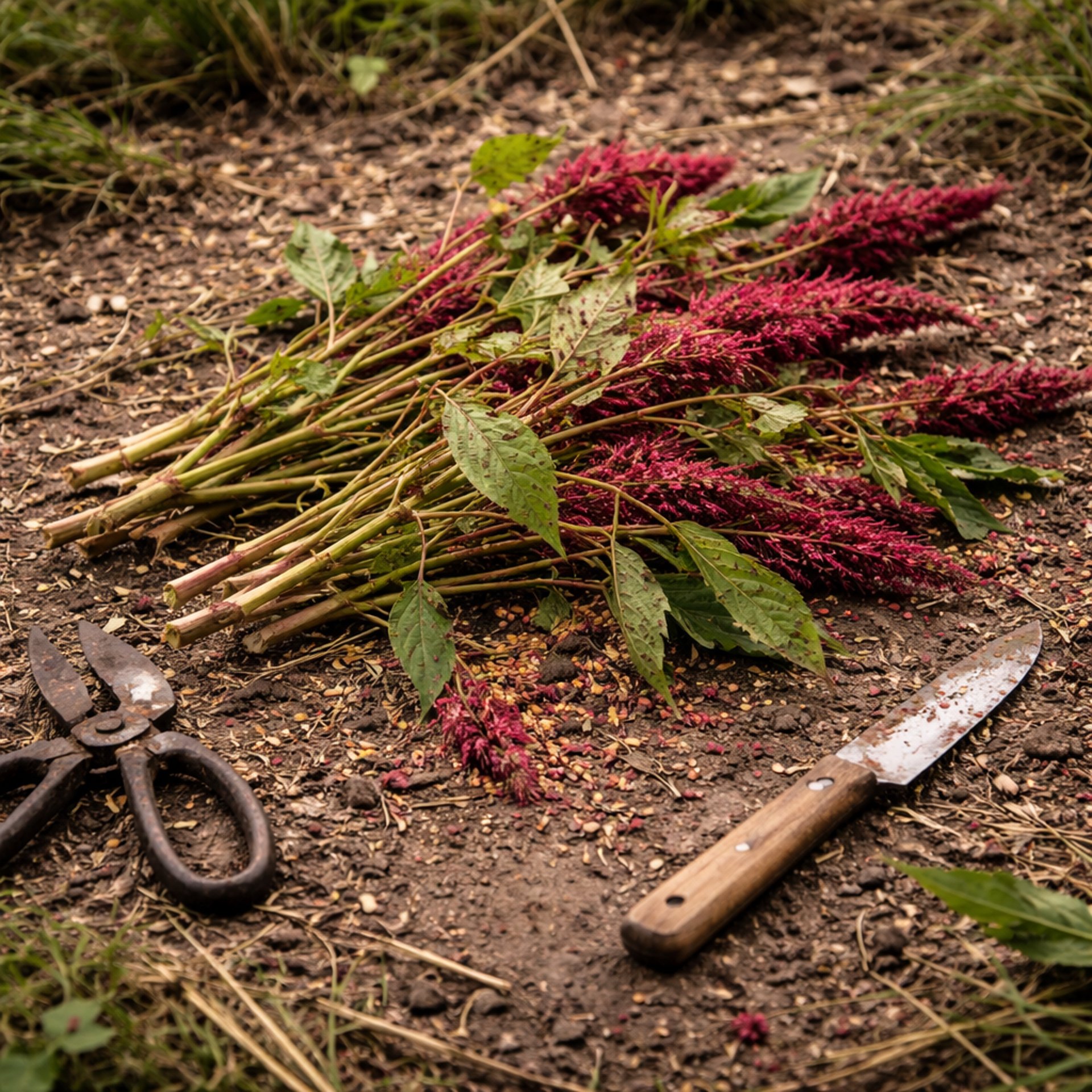
Amaranth is a tall, striking plant with broad green to reddish leaves and dense, plume-like flower heads that can range from deep red to gold.
The seeds are small, round, and typically pale cream to golden in color. When cooked, they soften into a slightly gelatinous texture.
The leaves are tender when young, becoming more robust with maturity.
Its flavor is mild, earthy, and slightly nutty. The seeds carry a soft, grain-like taste, while the leaves resemble other leafy greens with a gentle bitterness.
Amaranth carries a nourishing, building, and sustaining character. It feels steady and supportive, offering substance rather than stimulation.
The root of amaranth is typically thin, pale to light brown, and fibrous, lacking the density of larger medicinal roots but still carrying a quiet, functional presence. While less prominent than the seeds or leaves, it reflects the plant’s overall character—resilient, adaptable, and sustaining.
Energetically, the root carries a slightly more grounding and stabilizing quality compared to the lighter, more nutritive leaves and seeds.
Key Minerals & Constituents
In herbal practice, amaranth is used to support:
• Nutritional and mineral-rich formulations
• Strengthening and building preparations
• Daily nourishment
• Culinary herbal integration
• Long-term vitality
• Root-based supportive preparations (less common, but traditionally included)
While the seeds and leaves are most commonly used, the root has been incorporated in more traditional or whole-plant approaches. It is typically used in simple preparations, contributing a subtle grounding and supportive quality rather than acting as a primary or dominant medicinal root.
Historical & Cultural Context
Amaranth has a long and significant history, particularly in Aztec and other Mesoamerican cultures, where it was cultivated as a staple crop and held ceremonial importance.
It was used as both a food source and a symbolic plant, associated with sustenance, resilience, and continuity.
Despite periods of suppression following colonization, amaranth has endured and remains an important traditional food in many parts of the world.
Its history reflects a plant that is deeply tied to survival, nourishment, and cultural continuity.
Uses in Apothecary Work
In herbal practice, amaranth is used to support:
• Nutritional and mineral-rich formulations
• Strengthening and building preparations
• Daily nourishment
• Culinary herbal integration
• Long-term vitality
Amaranth is best understood as a food-based herb, bridging the gap between nourishment and herbal practice.
It is often used as part of a foundational approach, supporting the body over time rather than targeting specific conditions.

Contact
info@wildmedicineguide.com
+1-470-304-8111
© 2026 Wild Medicine Apothecary LLC. All rights reserved.
Kennesaw, GA
Wild Medicine Apothecary LLC provides educational information and professional tools for general informational purposes. Content and resources do not constitute legal advice, medical advice, or regulatory certification.
Herbalism, formulation, folklore, research, and small-batch apothecary work under one roof.
From plant monographs and seasonal features to cosmetic formulation, maker education, and practical documentation systems.
Wild Medicine Apothecary


Check out my other rantings at Brainz Magazine
Root around on our socials here