
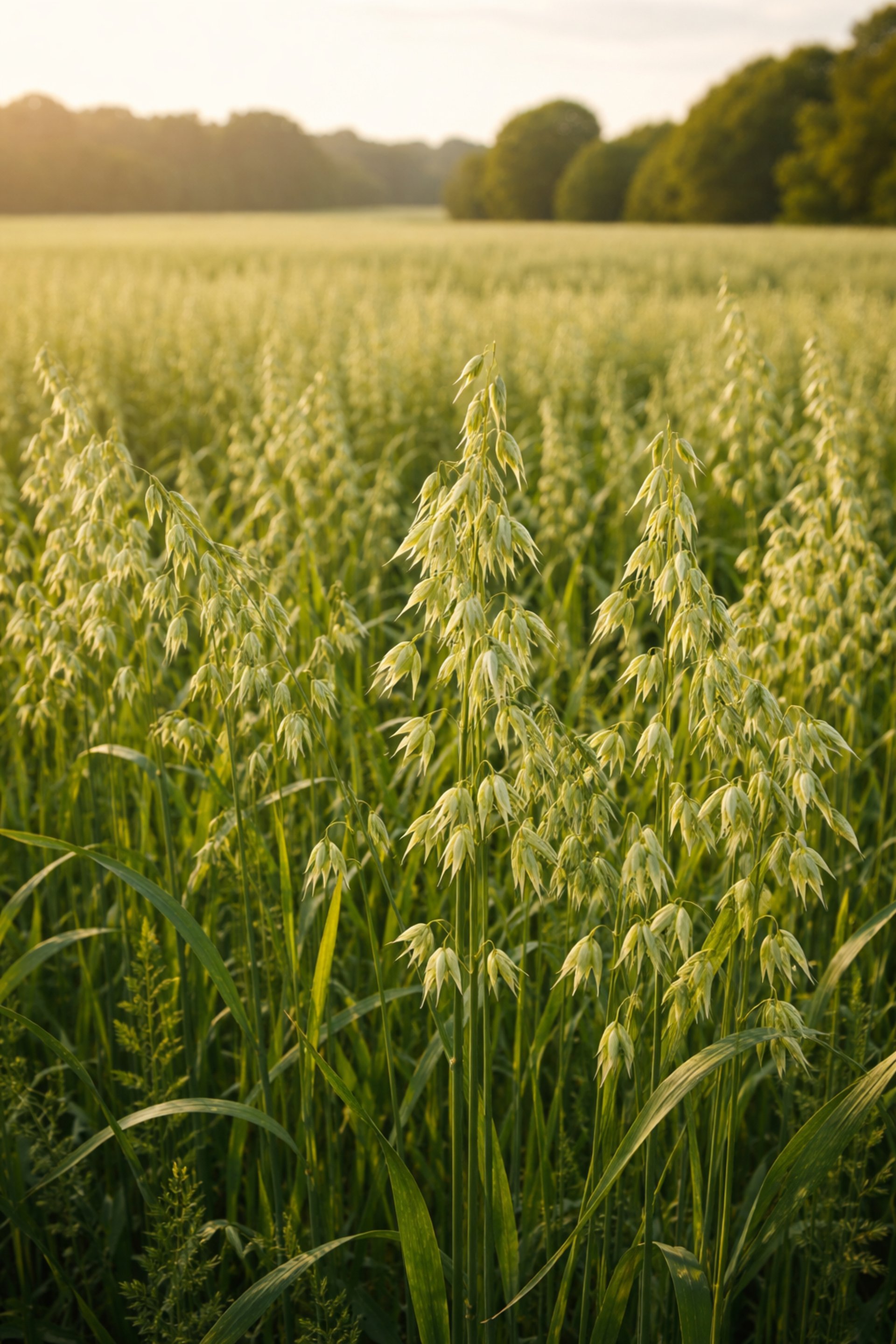
Oatstraw
Avena sativa
LEAVES & AERIAL HERBS
Oatstraw (Avena sativa)
Preparation & Best Practices
Oatstraw is commonly prepared in several traditional ways.
Common preparations include:
• Long herbal infusions
• Mineral-rich teas
• Tinctures (less common for oatstraw, more for milky oats)
• Inclusion in nutritive herbal blends
• Bath or skin preparations when combined with oat grain
Best practices include:
• Prepare long infusions (4–8 hours) to extract minerals
• Use generous quantities for nutritive preparations
• Combine with nettle, red clover, or linden in nourishing blends
• Store dried oatstraw in well-ventilated containers to prevent moisture buildup
Because oatstraw is nutrient-dense, long cold infusions improve extraction.
Best Extraction Practices
Oatstraw extracts best through water-based preparations, especially long infusions.
Recommended methods:
• Aerial parts — long infusion
• Milky oats — tincture or fresh extract
• Grain — decoction or culinary preparation
Alcohol extraction is less commonly used for oatstraw compared to infusion methods.
Shelf Life in Storage
Properly dried oatstraw should be stored in airtight containers in a cool, dry place away from light and humidity.
Approximate shelf life:
• Dried oatstraw: 1–2 years
• Tinctures (milky oats): 3–5 years
Material should remain light green to golden and mildly aromatic.
Safety Notes
Oatstraw is generally considered a very safe and nourishing herb.
Important considerations include:
• Individuals with gluten sensitivity should ensure properly sourced material
• Introduce gradually when trying new herbs
It is widely used as a daily tonic herb in traditional herbal practice.
Energetic & Ritual Associations
In traditional herbal energetics, oatstraw is often considered cooling, moistening, and deeply restorative.
It is frequently used when the body or nervous system has become depleted, overworked, or exhausted, helping to rebuild strength gradually over time.
Symbolically, oatstraw has long been associated with nourishment, stability, and quiet resilience, reflecting its role as both a staple food crop and a restorative herbal ally.
In the Archive With…
Often associated with herbs traditionally used for nervous system nourishment and long-term support, including:
Nettle
Linden
Chamomile
Skullcap
Red Clover
These herbs frequently appear in preparations intended to support deep nourishment, resilience, and restoration of the nervous system over time.
Appearance & Character
Oatstraw refers to the green stems and aerial parts of the oat plant, harvested while still fresh and vibrant before the grain fully matures.
The plant grows in soft, upright grasses reaching 2–4 feet tall, with slender green blades and nodding seed heads that later develop into oat grains. When harvested at the oatstraw stage, the plant is still flexible, green, and rich in nutrients.
The dried material appears as pale green to golden straw-like pieces, often cut and sifted, with a mild, earthy aroma.
The flavor is soft, slightly sweet, and grassy, making it well-suited for long infusions.
Identity & Origin
Oatstraw comes from the plant Avena sativa, a member of the Poaceae (grass) family.
It is native to Europe and western Asia, but is now widely cultivated across temperate regions worldwide as both a food crop and herbal material.
Key identifying features include:
• Leaf: long, narrow grass blades
• Stem: hollow, flexible green stalks
• Seed head: drooping oat grains (when mature)
• Growth habit: upright annual grass
Common names include:
• Oatstraw
• Green oats (sometimes used interchangeably depending on harvest stage)
Parts traditionally used:
• Aerial parts (oatstraw)
• Milky oats (immature seed tops) (different stage, different use)
• Oat grain
Key Minerals & Constituents
Oatstraw is valued for its rich nutritional profile and gentle restorative qualities.
Key constituents include:
• Calcium
• Magnesium
• Silica
• Iron
• B vitamins
• Flavonoids
• Saponins
These compounds contribute to oatstraw’s reputation as a deeply nourishing herb traditionally used for long-term support of the nervous system and overall vitality.
Historical & Cultural Context
Oats have been cultivated for thousands of years as both a food and a medicinal plant, particularly in Europe and northern climates.
While the grain became a staple food, the green aerial parts were traditionally used in herbal preparations intended to restore strength, especially after periods of depletion or stress.
In traditional Western herbalism, oatstraw and related oat preparations became known as restorative tonics, often used over long periods rather than for immediate effects.
Because of its nourishing qualities, oatstraw has long been associated with rebuilding, resilience, and steady restoration.
Uses in Apothecary Work
In herbal practice, oatstraw is commonly used to support:
• Nervous system nourishment
• Stress recovery and long-term depletion
• Mineral replenishment
• Skin, hair, and connective tissue support
• Gentle daily tonic use
Commonly used parts
• Aerial parts (oatstraw) — long infusions and mineral tonics
• Milky oats — tinctures and fresh plant extracts
• Oat grain — food and topical preparations (e.g., oatmeal)
Oatstraw is often used in formulas intended for long-term rebuilding rather than short-term intervention.
Contact
info@wildmedicineguide.com
+1-470-304-8111
© 2024. All rights reserved.
Kennesaw, GA
Wild Medicine Guide provides educational resources and professional tools. It does not provide legal advice or regulatory certification.
Wild Medicine Guide is part of the educational work of Wild Medicine Apothecary (WMA).
Wild Medicine Apothecary provides compliance education, documentation systems, and botanical reference materials for independent cosmetic brands.