
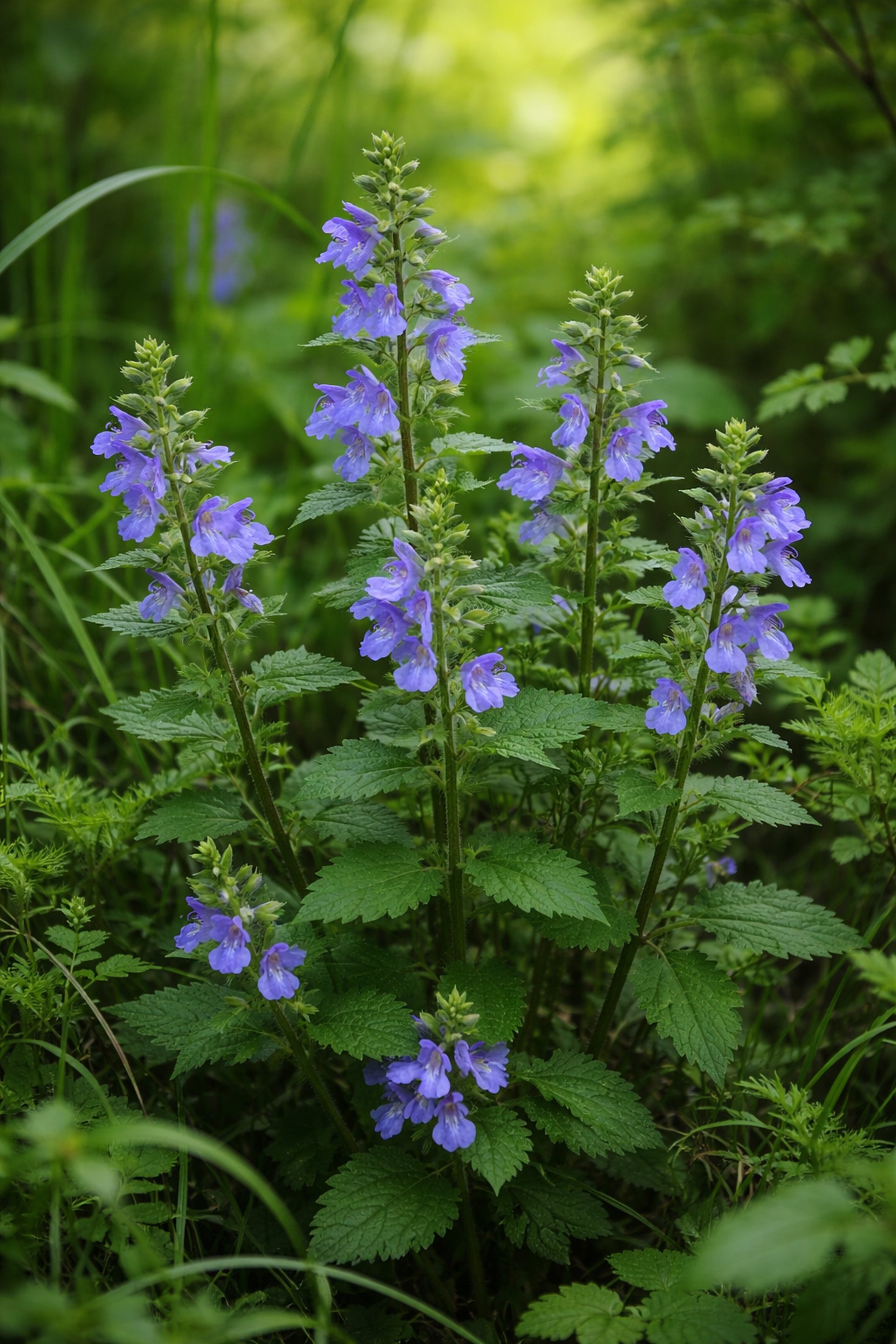
Skullcap
Scutellaria lateriflora
FLOWERSLEAVES & AERIAL HERBS
Skullcap (Scutellaria lateriflora)
Preparation & Best Practices
Skullcap is commonly prepared in several traditional ways.
Common preparations include:
• Herbal infusions made from dried aerial parts
• Tinctures (often prepared from fresh plant material)
• Glycerites for alcohol-free extracts
• Inclusion in calming herbal blends
Best practices include:
• Harvest during early flowering stage for optimal potency
• Use fresh plant material when possible, especially for tinctures
• Dry carefully in shaded, well-ventilated areas
• Combine with lemon balm, chamomile, or tulsi in calming blends
• Include with oatstraw or nettle in restorative formulas
Fresh skullcap is often considered more potent than fully dried material.
Best Extraction Practices
Skullcap extracts well through both water and alcohol-based preparations.
Recommended methods:
• Leaf and flowering tops — infusion, tincture, or glycerite
Fresh plant tinctures are commonly used to capture the plant’s full spectrum of active compounds, while infusions are suitable for daily use.
Shelf Life in Storage
Dried skullcap should be stored in airtight containers in a cool, dry place away from light.
Approximate shelf life:
• Dried aerial parts: 1–2 years
• Tinctures: 3–5 years
Properly stored material should retain a green color and mild herbal aroma.
Safety Notes
Skullcap is generally considered a gentle and traditionally well-tolerated herb.
Important considerations include:
• Use properly identified Scutellaria lateriflora
• Introduce gradually when trying new herbal preparations
• Consult a practitioner when using alongside medications or during pregnancy
Moderate use is generally recommended.
Energetic & Ritual Associations
In traditional herbal energetics, skullcap is often considered cooling, calming, and stabilizing to the nervous system.
It is frequently used when the body or mind feels overstimulated, tense, or depleted, helping to restore a sense of quiet balance.
Symbolically, skullcap has been associated with peace, restoration, and gentle protection, reflecting its role as a herb that supports the unwinding of tension and the return to equilibrium.
Appearance & Character
Skullcap is a delicate, branching herb with slender stems, small serrated leaves, and tiny blue to violet tubular flowers that grow along one side of the stem.
The plant typically grows 1–3 feet tall, forming airy clusters in moist environments such as meadows, streambanks, and woodland edges. The leaves are soft, lance-shaped, and lightly toothed, while the flowers are subtle but distinctive, appearing in paired formations along the upper stems.
The plant has a mild, slightly bitter, and green flavor, with a gentle herbal aroma.
When dried, the aerial parts become light, fragile, and muted green, often mixed with small fragments of stems and leaves.
Identity & Origin
Skullcap (Scutellaria lateriflora) is a perennial herb belonging to the Lamiaceae (mint) family.
It is native to North America, where it grows in damp soils and partially shaded areas.
Key identifying features include:
• Leaf: small, opposite leaves with serrated edges
• Stem: square stems typical of mint family plants
• Flower: small blue-violet flowers growing along one side of the stem
• Growth habit: branching, airy structure
Common names include:
• Skullcap
• American skullcap
• Blue skullcap
Parts traditionally used:
• Leaf
• Flowering tops
Key Minerals & Constituents
Skullcap contains a variety of compounds associated with its traditional calming properties.
Key constituents include:
• Flavonoids (including baicalin and scutellarin)
• Phenolic compounds
• Tannins (mild)
• Volatile compounds
These compounds contribute to skullcap’s reputation as a nervous system-supportive herb traditionally used for relaxation and balance.
Historical & Cultural Context
Skullcap has a long history of use in North American herbal traditions, particularly among early European settlers and traditional Western herbalists.
It became widely known as a nervine herb, used in preparations intended to support relaxation and ease nervous tension.
In the 18th and 19th centuries, skullcap was also included in various traditional formulas associated with calming the nervous system, and it gained a reputation as a gentle but effective herbal ally for stress and restlessness.
Because of its subtle yet noticeable effects, skullcap became a valued herb in daily tonic and restorative blends.
Uses in Apothecary Work
In herbal practice, skullcap is commonly used to support:
• Nervous system balance
• Relaxation and stress response
• Occasional restlessness
• Muscle tension
• Gentle sleep support
Commonly used parts
• Leaf — infusions, tinctures, glycerites
• Flowering tops — tinctures and calming blends
Skullcap is often included in formulas intended to gently calm and restore the nervous system over time.
Contact
info@wildmedicineguide.com
+1-470-304-8111
© 2024. All rights reserved.
Kennesaw, GA
Wild Medicine Guide provides educational resources and professional tools. It does not provide legal advice or regulatory certification.
Wild Medicine Guide is part of the educational work of Wild Medicine Apothecary (WMA).
Wild Medicine Apothecary provides compliance education, documentation systems, and botanical reference materials for independent cosmetic brands.