
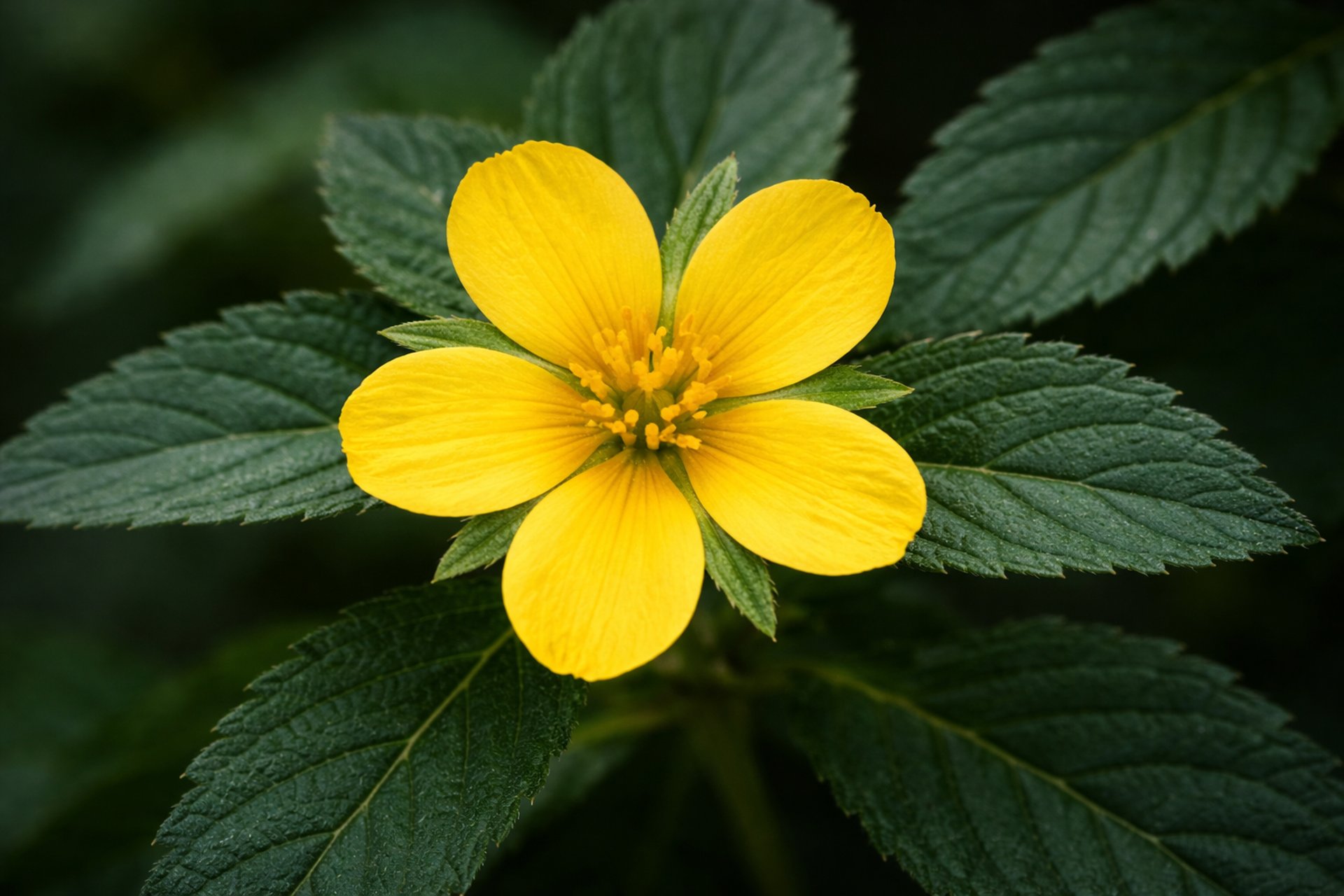
Damiana
Turnera diffusa
FLOWERS
Damiana (Turnera diffusa)
Preparation & Best Practices
Damiana is commonly prepared in several traditional ways.
Common preparations include:
• Infusions and teas
• Tinctures
• Smoking or aromatic blends
• Infused honey or elixirs
Best practices include:
• Use freshly dried leaf for best aroma and potency
• Steep covered to preserve volatile compounds
• Combine with lavender or lemon balm for calming blends
• Pair with rose or tulsi for emotional support formulas
• Combine with ginger or cinnamon for warming vitality blends
Damiana works best when used in balanced, supportive formulas rather than as a dominant herb.
Best Extraction Practices
Damiana extracts well through multiple methods.
Recommended methods:
• Leaf — infusion
• Leaf — tincture
• Leaf — glycerite
• Leaf — infused honey
Alcohol and glycerin both extract damiana’s aromatic and nervine compounds effectively.
Shelf Life in Storage
Damiana should be stored in:
• Airtight containers
• Cool, dry conditions
• Away from light
Approximate shelf life:
• Dried leaf: 1–2 years
• Powder: ~1 year
• Tinctures: 3–5 years
A strong, slightly sweet aroma indicates good quality.
Safety Notes
Damiana is generally considered a safe and gentle herb when used appropriately.
Important considerations include:
• Use in moderate amounts
• Monitor individual sensitivity
• Use thoughtfully in concentrated preparations
Energetic & Ritual Associations
Damiana is considered warming, relaxing, and gently stimulating, with a unique dual action that both soothes and awakens.
It is often used when there is tension, depletion, or emotional disconnection, helping to restore a sense of presence, softness, and embodied awareness.
Symbolically, damiana has long been associated with connection, sensuality, vitality, and openness, often used to support both personal and relational balance.
In the Archive With…
Often associated with herbs traditionally used for nervous system support, emotional balance, and gentle vitality, including:
Lavender
Lemon Balm
Tulsi
Rose
Oatstraw
These herbs frequently appear in preparations intended to support relaxation, emotional connection, and restoration of vitality.
Appearance & Character
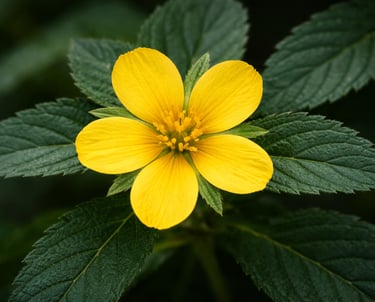
Damiana is a small, aromatic shrub with light green, serrated leaves and small yellow flowers, native to warm, dry regions.
The leaves are soft, slightly fuzzy, and delicate, often curling slightly when dried. The plant carries a distinct, warm, slightly sweet and herbaceous aroma, with subtle notes that are both earthy and faintly spicy.
When dried, damiana appears as loose, light green to olive-toned leaf fragments, sometimes mixed with fine stems.
Its flavor is mildly bitter, aromatic, and slightly sweet, with a warming quality that lingers gently.
Identity & Origin
Damiana (Turnera diffusa) belongs to the Passifloraceae (passionflower) family.
It is native to Mexico, Central America, and parts of the southern United States, where it grows in dry, sunny environments.
Key identifying features include:
• Leaf: small, serrated, aromatic leaves
• Flower: small yellow blossoms
• Growth habit: low-growing, woody shrub
• Aroma: warm, slightly sweet, herbaceous
Common names include:
• Damiana
Parts traditionally used:
• Leaf (primary)
Key Minerals & Constituents
Damiana contains a variety of active compounds.
Key constituents include:
• Flavonoids
• Volatile oils
• Terpenes
• Bitter compounds
• Arbutin (trace)
These contribute to damiana’s role as a nervine, mild tonic, and traditional reproductive-supportive herb.
Historical & Cultural Context
Damiana has a long history of use in Mesoamerican herbal traditions, particularly in Mexico, where it has been used for centuries as a tonic for vitality, mood, and reproductive health.
It has traditionally been associated with relaxation, sensuality, and emotional openness, often used in teas, smoking blends, and infused preparations.
In folk traditions, damiana has been regarded as an herb that supports connection — both within the body and between individuals, carrying both physical and symbolic significance.
Uses in Apothecary Work
In herbal practice, damiana is commonly used to support:
• Nervous system relaxation
• Mood and emotional balance
• Reproductive and hormonal support
• Mild digestive stimulation
• General vitality and tone
Commonly used parts
• Leaf — infusions, tinctures, smoking blends, infused preparations
Damiana is especially well known as a gentle nervine with an affinity for the reproductive system, often used where there is tension, depletion, or disconnection.

Contact
info@wildmedicineguide.com
+1-470-304-8111
© 2026 Wild Medicine Apothecary LLC. All rights reserved.
Kennesaw, GA
Wild Medicine Apothecary LLC provides educational information and professional tools for general informational purposes. Content and resources do not constitute legal advice, medical advice, or regulatory certification.
Herbalism, formulation, folklore, research, and small-batch apothecary work under one roof.
From plant monographs and seasonal features to cosmetic formulation, maker education, and practical documentation systems.
Wild Medicine Apothecary


Check out my other rantings at Brainz Magazine
Root around on our socials here