
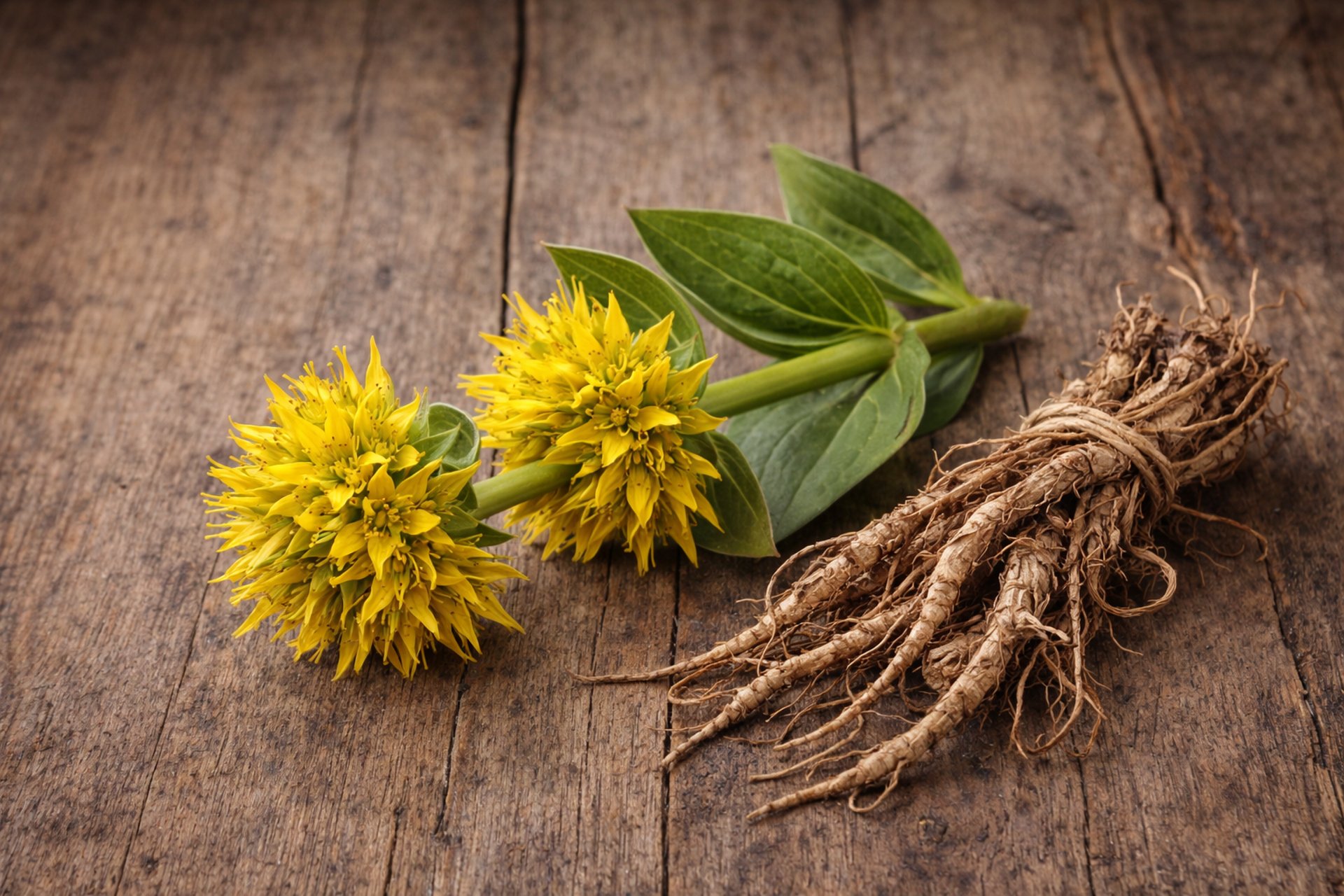
Gentian
Gentiana lutea
ROOTS AND BARK
Gentian (Gentiana lutea)
Preparation & Best Practices
Gentian root is commonly prepared in several traditional ways.
Common preparations include:
• Tinctures made from dried root
• Decoctions for bitter herbal preparations
• Digestive bitters blends
• Inclusion in herbal liqueurs and tonics
Best practices include:
• Use small quantities due to the root’s intense bitterness
• Slice or crush root before extraction
• Combine with herbs such as dandelion, chicory, or burdock in digestive formulas
• Harvest mature roots in autumn after several years of growth
Because of its potency, gentian is often used as a supporting herb rather than the primary ingredient in formulas.
Best Extraction Practices
Gentian root extracts effectively through several preparation methods.
Recommended methods:
• Tincture
• Decoction
• Vinegar or bitters extraction
Alcohol and vinegar extractions are commonly used in traditional bitters formulas to capture the root’s bitter glycosides.
Shelf Life in Storage
Properly dried gentian root should be stored in airtight containers in a cool, dry location away from light and moisture.
Approximate shelf life:
• Dried root: 3–5 years
• Tinctures: 5 years or longer
The dried root retains its intense bitterness for many years when properly stored.
Safety Notes
Gentian is generally considered a potent but traditionally used bitter herb.
Important considerations include:
• Avoid large quantities due to strong bitterness
• Individuals with active stomach irritation or ulcers may wish to avoid strong bitters
• Introduce gradually when trying new herbal preparations
Because of its strength, gentian is typically used in small doses within herbal formulas.
Energetic & Ritual Associations
In traditional herbal energetics, gentian is often considered cooling, strongly bitter, and stimulating to digestive fire.
It is frequently associated with restoring movement and function where digestion has become sluggish or stagnant.
Symbolically, gentian has been linked with clarity, awakening, and the sharpening of perception, reflecting the plant’s intense bitterness and its long history as a digestive stimulant.
In the Archive With…
Often associated with herbs traditionally used for digestive and bitter tonic support, including:
Burdock
Dandelion
Chicory
Chamomile
Peppermint
These herbs frequently appear in preparations intended to support balanced digestion, stimulation of digestive secretions, and metabolic harmony.
Appearance & Character
Gentian is a tall perennial mountain herb known for its bright yellow star-shaped flowers and extremely bitter root.
While many gentian species are known for their vivid blue alpine flowers, the medicinal species most commonly used in herbal preparations, Gentiana lutea, produces upright stems with clusters of yellow blossoms.
Identity & Origin
Gentian (Gentiana lutea) is a perennial plant belonging to the Gentianaceae family.
It is native to mountain regions of central and southern Europe, where it grows in alpine meadows and high-altitude grasslands. The plant has been harvested for centuries for its medicinal root.
Key identifying features include:
• Leaf: large, broad leaves with pronounced parallel veins
• Flower: bright yellow star-shaped flowers arranged in tiers along the stem
• Root: thick, branching root system with intensely bitter taste
• Growth habit: tall upright perennial herb
Common names include:
• Gentian
• Yellow gentian
• Bitter root
Parts traditionally used:
• Root (primary medicinal portion)
• Leaf and flower (occasionally referenced botanically but rarely used medicinally)
Key Minerals & Constituents
Gentian root contains several compounds responsible for its powerful bitter properties.
Key constituents include:
• Bitter glycosides (gentiopicroside, amarogentin)
• Alkaloids
• Xanthones
• Sugars and polysaccharides
• Trace minerals
Gentian contains some of the most intensely bitter compounds known in herbal medicine, which contribute to its traditional role as a digestive bitter.
Historical & Cultural Context
Gentian has been used in European herbal traditions for more than two thousand years.
The plant’s name is often attributed to King Gentius of Illyria, who was said to have discovered its medicinal uses. Since ancient times, gentian root has been included in herbal preparations intended to stimulate digestion and support metabolic balance.
The root became a classic ingredient in traditional bitters, tonics, and herbal liqueurs, and it remains widely used in both herbal medicine and culinary bitters today.
Because of its extreme bitterness, gentian has long been regarded as the archetypal bitter herb in herbal pharmacopoeias.
Uses in Apothecary Work
In herbal practice, gentian is most commonly used to support:
• Digestive stimulation
• Appetite support
• Metabolic balance
• Bitter tonic formulas
Commonly used parts
• Root — tinctures, decoctions, bitters, and digestive formulas
Gentian root is often used in small amounts due to its very strong bitter intensity, frequently combined with other digestive herbs.
Contact
info@wildmedicineguide.com
+1-470-304-8111
© 2024. All rights reserved.
Kennesaw, GA
Wild Medicine Guide provides educational resources and professional tools. It does not provide legal advice or regulatory certification.
Wild Medicine Guide is part of the educational work of Wild Medicine Apothecary (WMA).
Wild Medicine Apothecary provides compliance education, documentation systems, and botanical reference materials for independent cosmetic brands.