
Borage has retired to the Archive.
Its full monograph and preparation notes are now available in the Monograph Library.
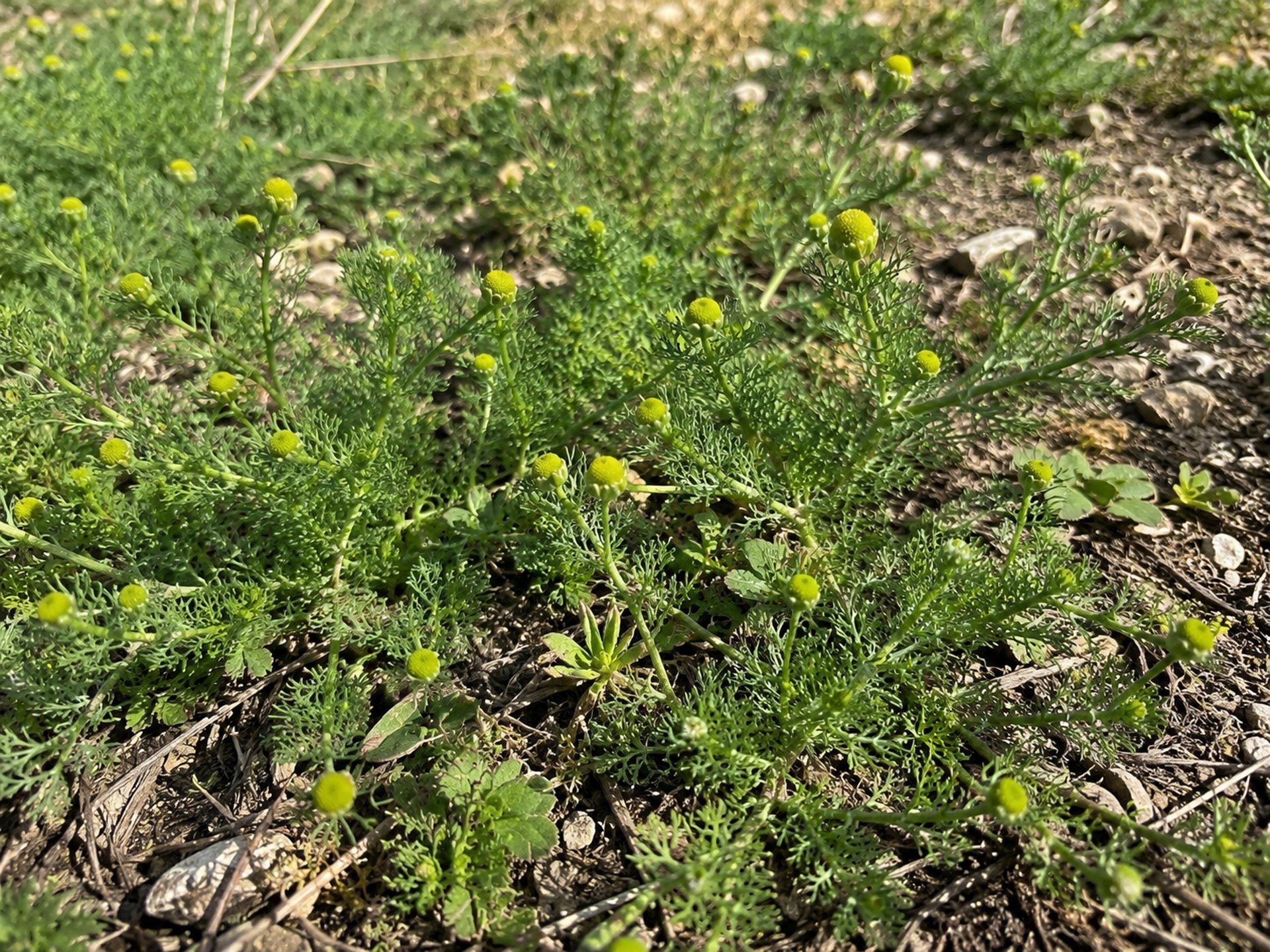
SPOTLIGHT OF THE MONTH: PINEAPPLE WEED
Humility • Heat • Unexpected Sweetness
This month, Borage steps forward for its role as:
• Roadside Ally
• Gentle Soother
• Summer Digestive Herb
• Unexpected Comfort
• Low-Growing Teacher
Pineapple Weed does not ask for attention.
It grows where feet pass,
where gravel warms,
where the ground has been compacted,
where softness somehow survives.
Small, bright, and often overlooked, Pineapple Weed offers one of summer’s sweetest surprises:
a golden-green scent like pineapple and chamomile rising from the heat.
It is not grand.
It is not delicate.
It is not rare.
It is common medicine.
Found medicine.
The kind that reminds us that usefulness does not always look impressive.
This spotlight explores Pineapple Weed as material, medicine, and
memory, and pairs it with a July practice suited to high summer,
when the body may need cooling, settling, and small moments of ease.
Retiring to the Archive on August 1st.
WHY PINEAPPLE WEED FOR JULY
A small herb for hot days and overstimulated systems.
July is full sun.
Heat rising from pavement.
Long days.
Fast movement.
Too much noise, too much light, too much everything.
Pineapple Weed meets that energy with simplicity.
Seasonally, it has been associated with:
• gentle digestive support
• calming the nervous system
• summer heat and irritability
• children’s herbal preparations
• everyday comfort care
It is closely related to chamomile, but humbler in presentation - less garden, more roadside.
It reminds us that relief can be small.
That sweetness can grow in hard places.
That medicine does not always arrive polished.
Here, in this temporary space before Pineapple Weed joins the Archive formally, you’re invited to meet it through:
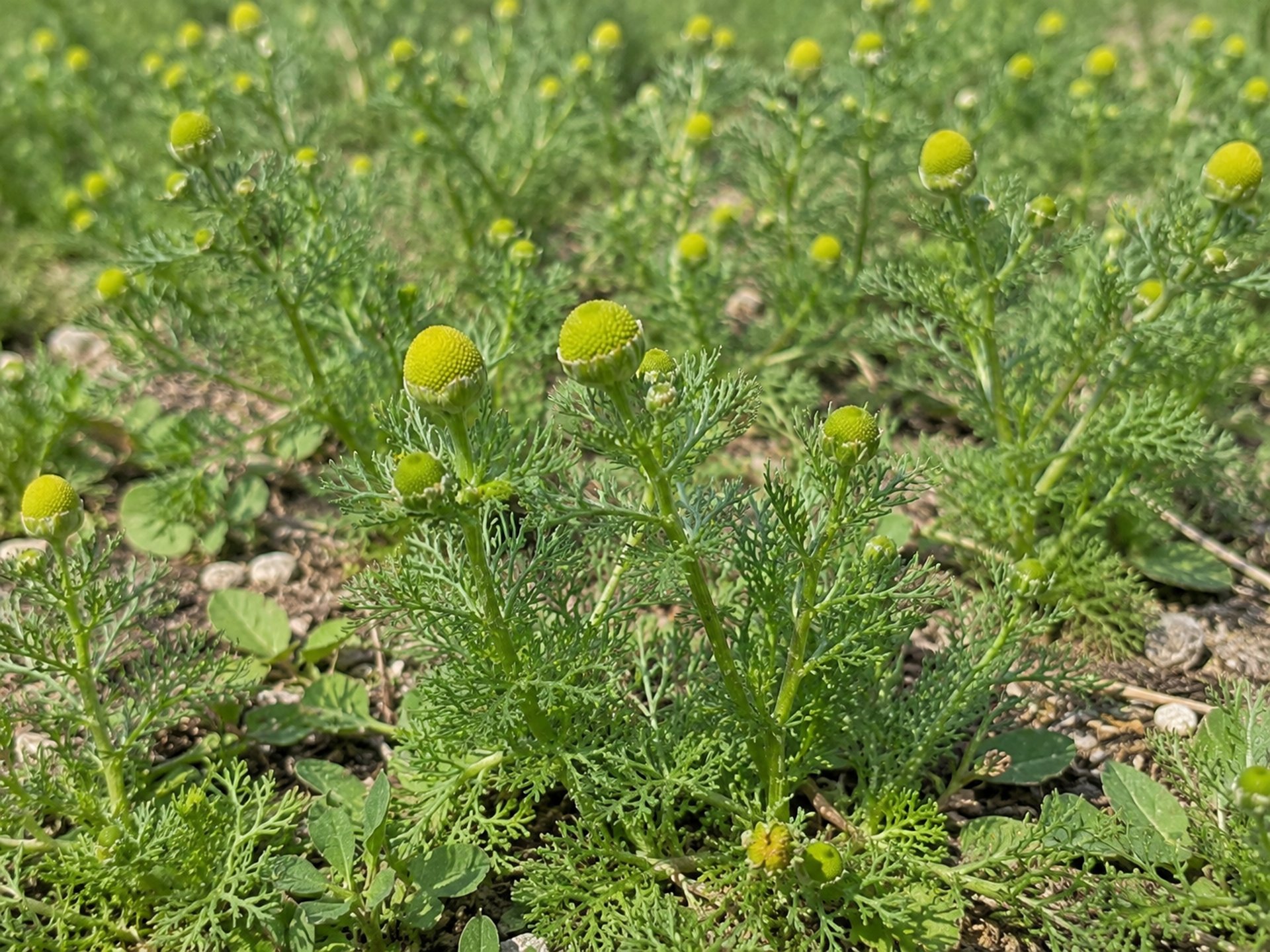
its low-growing form and pineapple-like scent
its relationship to chamomile and summer heat
its role in simple infusions and gentle preparations
its energetic connection to humility and resilience
a craft that brings its soft, cooling nature into daily life
Pineapple Weed is more than a weed.
It is a reminder that comfort can be found close to the ground,
that overlooked things often carry sweetness,
and that resilience does not always announce itself.
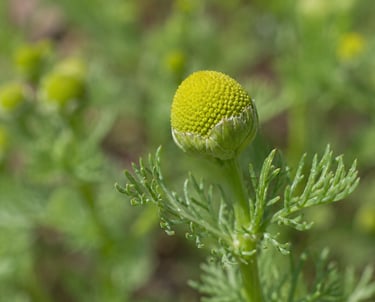
Pineapple Weed (Matricaria discoidea) is a low-growing annual in the Asteraceae family, often found in disturbed soils, pathways, roadsides, and compacted ground.
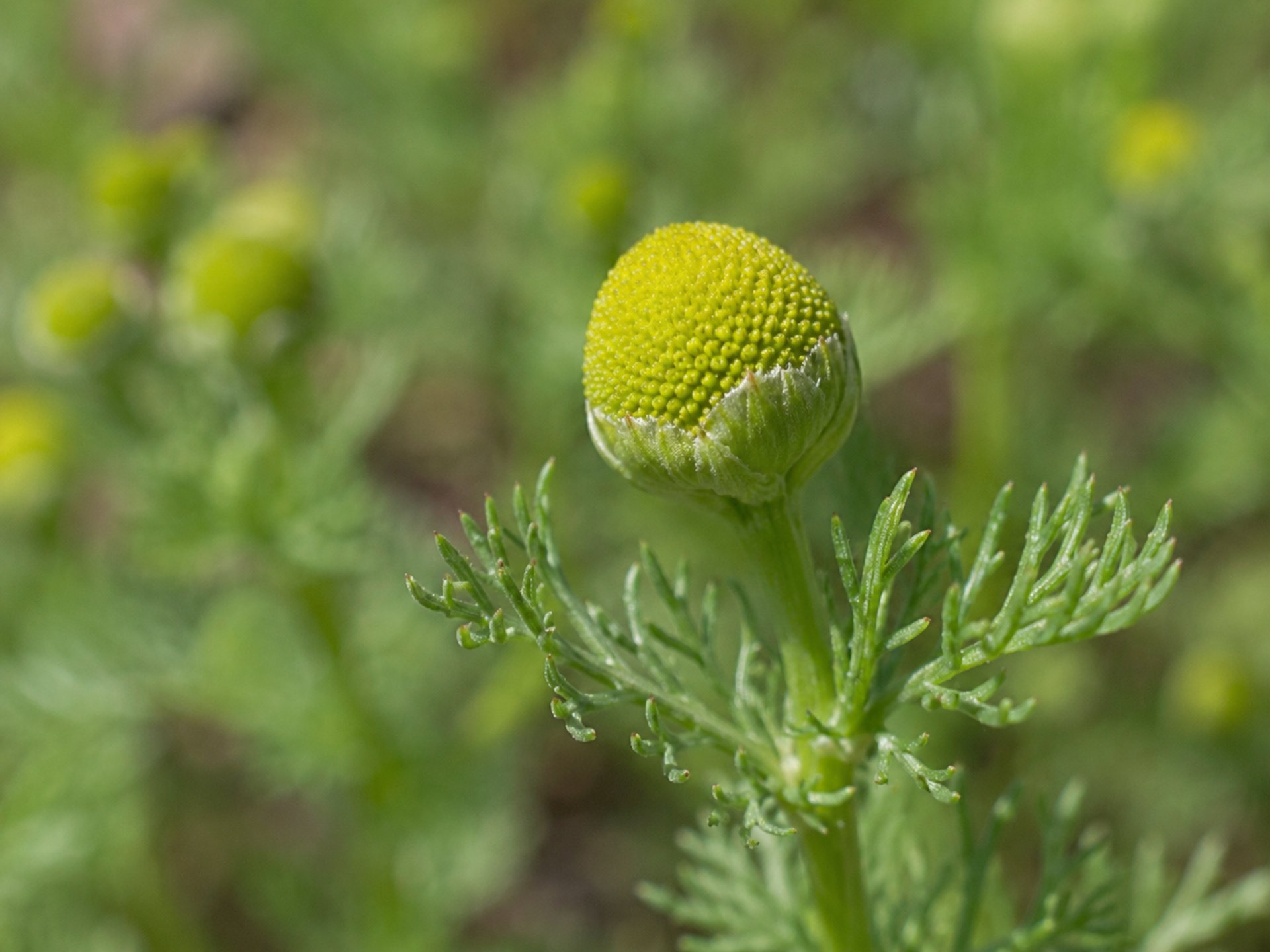
Its small cone-shaped flower heads lack showy petals, but when crushed, they release a sweet aroma reminiscent of pineapple and chamomile.
Traditionally, Pineapple Weed has been used similarly to chamomile: gentle, soothing, aromatic, and supportive during discomfort, especially when the body or spirit feels overheated or unsettled.
Its medicine is not dramatic.
It is practical.
Accessible.
Kind.
Pineapple Weed (Matricaria discoidea)
Preparation & Best Practices
Pineapple Weed is most commonly prepared using the fresh or dried flowering tops.
Common preparations include:
Best practices include:
• Harvesting flower heads during dry weather after morning dew has evaporated.
• Choosing plants growing away from roadsides, pesticides, and contaminated ground.
• Drying flowers gently in a shaded, well-ventilated space to preserve aroma.
• Pairing with herbs such as lemon balm, peppermint, or chamomile in calming blends.
• Using fresh material whenever possible to enjoy its full fragrance.
Because of its delicate aromatic compounds, Pineapple Weed responds best to gentle preparation rather than prolonged heating.
Best Extraction Practices
Pineapple Weed extracts well in hot water, vegetable glycerin, and vinegar.
Infusion is the preferred preparation, capturing both its aromatic compounds and gentle supportive qualities.
Because it contains relatively delicate volatile oils, prolonged boiling is generally avoided.
Shelf Life in Storage
Store dried Pineapple Weed in an airtight container away from direct sunlight, moisture, and excessive heat.
Approximate shelf life:
• Dried flowering tops - 1 year
• Glycerite - 1–2 years
• Vinegar infusion - 1–2 years
• Fresh infusion - Up to 24 hours refrigerated
As with many aromatic herbs, fragrance is an excellent indicator of freshness.
Safety Notes
Pineapple Weed is generally considered a gentle herb when properly identified and used appropriately.
Because it belongs to the Asteraceae family, individuals with sensitivities to plants within this family should use appropriate caution.
Always harvest from clean environments, as Pineapple Weed frequently grows in areas that may be exposed to vehicle traffic, herbicides, or other contaminants.
Energetic & Ritual Associations
Pineapple Weed is considered cooling, gently drying, and softly relaxing. It is often turned to when life feels overstimulating, hurried, or overheated, offering a quiet invitation to slow down and reconnect with simple comforts.
Symbolically, Pineapple Weed represents humility, resilience, and overlooked abundance. It thrives where many other plants struggle, flourishing in compacted paths and disturbed ground without demanding attention.
Its medicine reminds us that healing does not always come from rare or exotic plants. Sometimes it waits quietly beneath our feet, asking only that we notice.
In the Archive With…
Often associated with herbs used for gentle calming, aromatic support, and summer wellbeing, including:
These herbs frequently appear in preparations intended to support relaxation, digestion, and seasonal balance, working together to create blends that are comforting, accessible, and deeply restorative.
Identity & Origin
Identity & Origin
Pineapple Weed (Matricaria discoidea), also known as wild chamomile, rayless chamomile, or disc mayweed, is a low-growing annual herb in the Asteraceae family. Native to northeastern Asia, it has become widely naturalized throughout North America and Europe, where it commonly grows along trails, roadsides, compacted soils, gravel paths, and disturbed ground.
Unlike true chamomile, Pineapple Weed lacks the familiar white ray petals, producing only rounded greenish-yellow flower heads. Despite its humble appearance, it has earned a place in traditional folk herbalism due to its gentle aromatic qualities and remarkable resilience.
The flowering tops and aerial portions are the parts most commonly gathered for herbal use, ideally harvested while fresh and in full bloom during the height of summer.
Appearance & Character
Pineapple Weed forms low mats of finely divided, fern-like foliage with numerous small, cone-shaped flower heads rising from slender stems. The flowers are bright yellow-green and petal-less, giving them a distinctive button-like appearance.
When crushed between the fingers, the flower heads release a warm, sweet fragrance remarkably similar to ripe pineapple with soft chamomile undertones-a characteristic that gives the plant both its common name and much of its charm.
Its taste is mildly sweet, aromatic, and gently bitter.
Pineapple Weed carries a cooling, calming, and quietly uplifting character. It is approachable and gentle, offering comfort without heaviness and support without force.
Key Minerals & Constituents
Pineapple Weed contains a variety of aromatic and supportive plant compounds.
Key constituents include:
• Volatile aromatic oils
• Flavonoids
• Sesquiterpene lactones
• Coumarins
• Mild bitter compounds
These constituents contribute to its traditional reputation as a gentle aromatic, calming herb, and digestive ally.
Historical & Cultural Context
Although less celebrated than German or Roman chamomile, Pineapple Weed has long been appreciated in regional folk traditions throughout North America and northern Europe.
Its abundance along well-traveled paths made it a familiar companion to farmers, children, and foragers alike. Rather than being cultivated, it was gathered opportunistically from places where it naturally flourished.
Because of its pleasant aroma and mild nature, it was commonly prepared as simple teas and household remedies, particularly during the warmer months when digestive discomfort or seasonal fatigue were more common.
Pineapple Weed has become a symbol of finding medicine in overlooked places, reminding herbalists that valuable plants are often those growing quietly beneath our feet.
Uses in Apothecary Work
In herbal practice, Pineapple Weed is commonly used to support:
• Gentle digestive comfort
• Mild nervous system relaxation
• Aromatic tea blends
• Seasonal calming preparations
• Bath and wash infusions
• Children's herbal preparations (where appropriate)
Pineapple Weed is best understood as a gentle daily herb, offering subtle support rather than dramatic intervention.
Its approachable flavor and pleasant aroma make it especially well suited for introducing people to herbal infusions and simple home apothecary preparations.
Craft of the Month
Pineapple Weed Summer Soothing Infusion
Gentle Cooling Tea or Bath Add-In
A simple preparation for July heat, restless bodies, and overstimulated days.
This is not a strong intervention.
It is a pause.
A small cup of relief.
A soft landing.
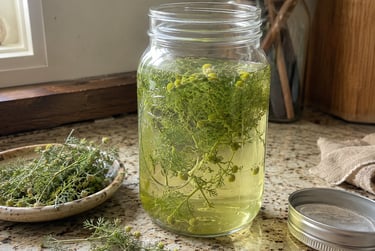
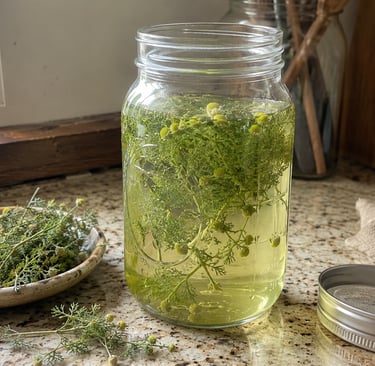
INGREDIENTS
• 1–2 tsp dried pineapple weed
• 1 cup hot water
• Optional: small pinch lemon balm
• Optional: honey, if desired
Instructions
Steep
Pour hot water over the pineapple weed. Cover and steep for 10–15 minutes.
Strain
Strain well and allow to cool slightly.
Use
Sip slowly as a gentle tea, or add the strained infusion to a bath for a soft summer soak.
Frequency
Use as needed for gentle seasonal support.
WHY THIS CRAFT WORKS
(The Apothecary Breakdown)
Pineapple Weed offers gentle aromatic support, similar in spirit to chamomile but with its own wild, sun-warmed personality.
In infusion, it may support:
• digestive ease
• nervous system calming
• summer irritability
• gentle comfort during heat
Lemon balm adds a cooling, uplifting quality, while honey softens the flavor and brings the preparation into a more comforting space.
This is a July preparation because it is simple, accessible, and not overworked.
Exactly what high summer asks for.
A Sunday note from Wild Medicine Apothecary with the week’s recap, deeper plant and formulation notes, behind-the-scenes context, and a peek at what’s coming next. No inbox chaos, just one rooted note a week.
Join The Weekly Root-Up


Contact
info@wildmedicineguide.com
+1-470-304-8111
© 2024. All rights reserved.
Kennesaw, GA
Wild Medicine Guide provides educational resources and professional tools. It does not provide legal advice or regulatory certification.
Wild Medicine Guide is part of the educational work of Wild Medicine Apothecary (WMA).
Wild Medicine Apothecary provides compliance education, documentation systems, and botanical reference materials for independent cosmetic brands.